
Last updated November 18, 2026
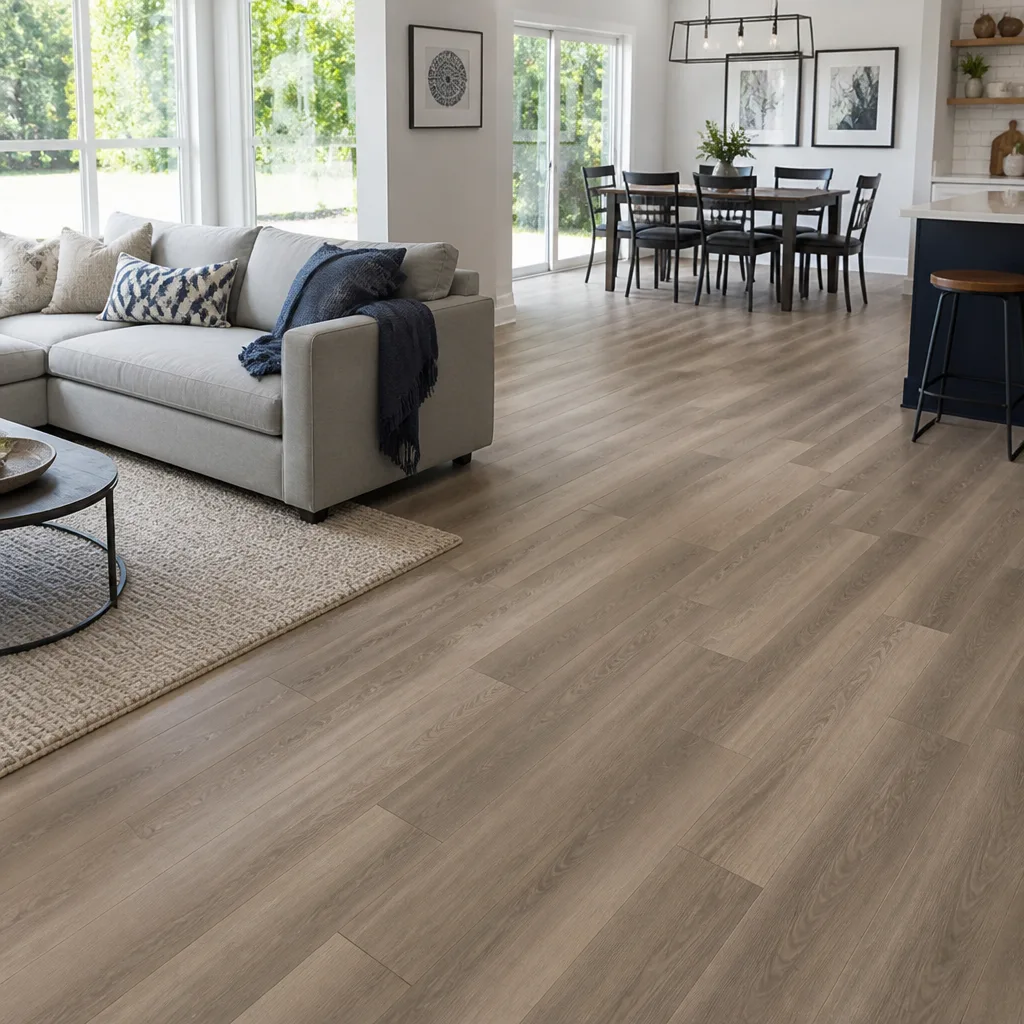 Luxury vinyl plank
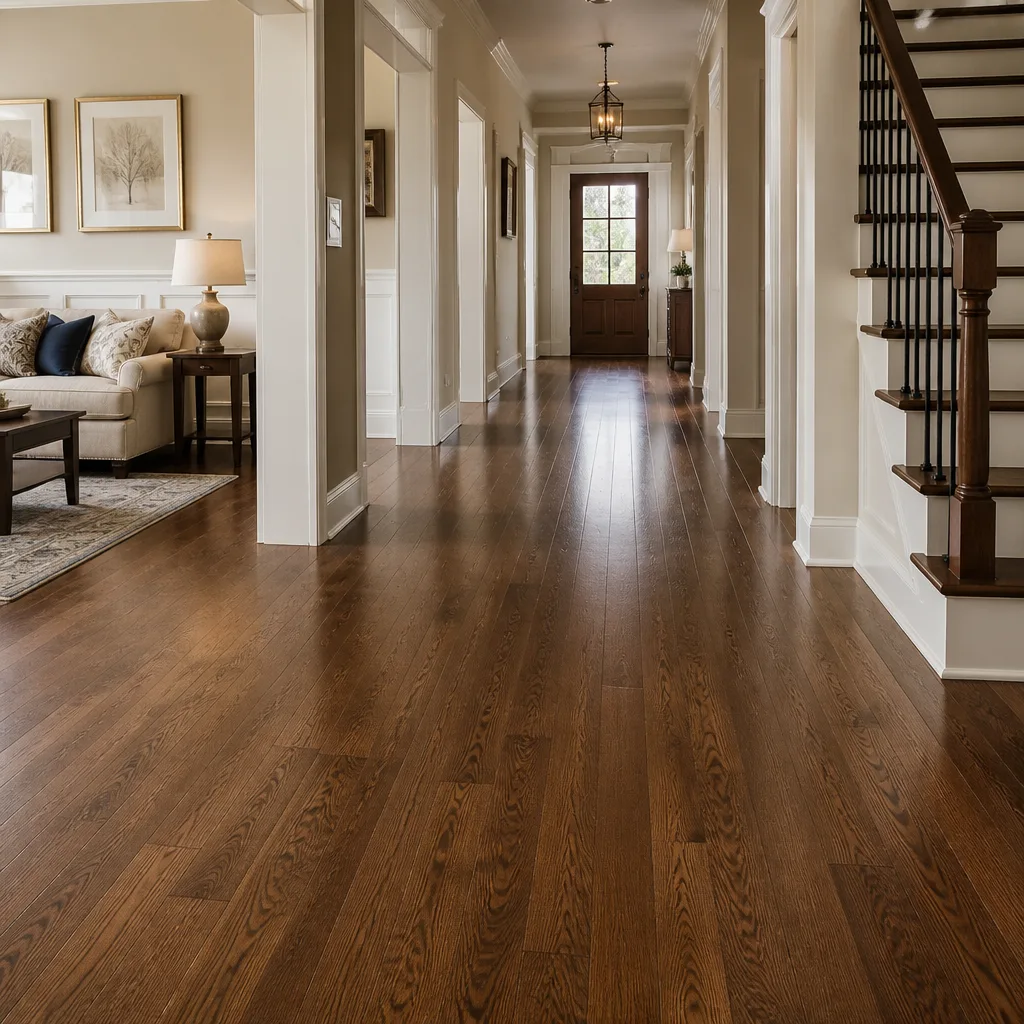 Hardwood
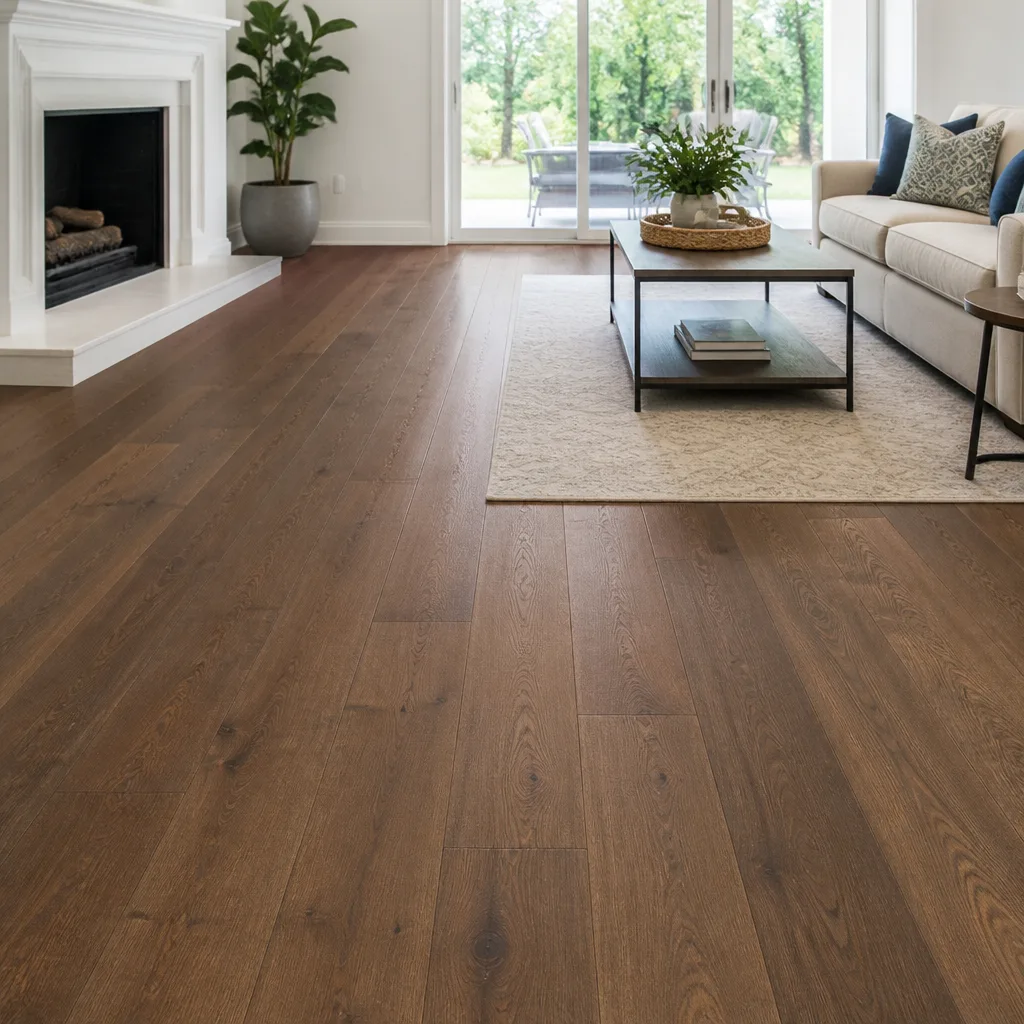 Engineered hardwood
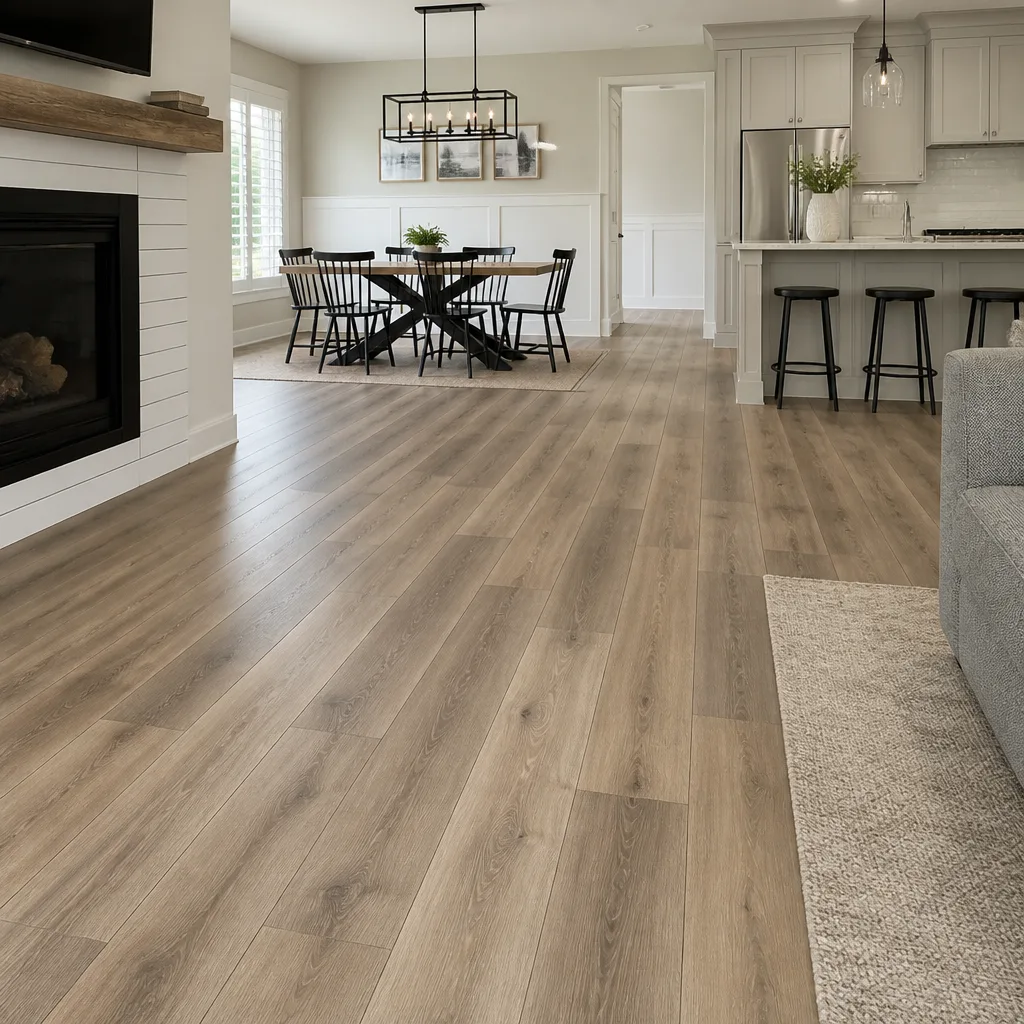 Laminate
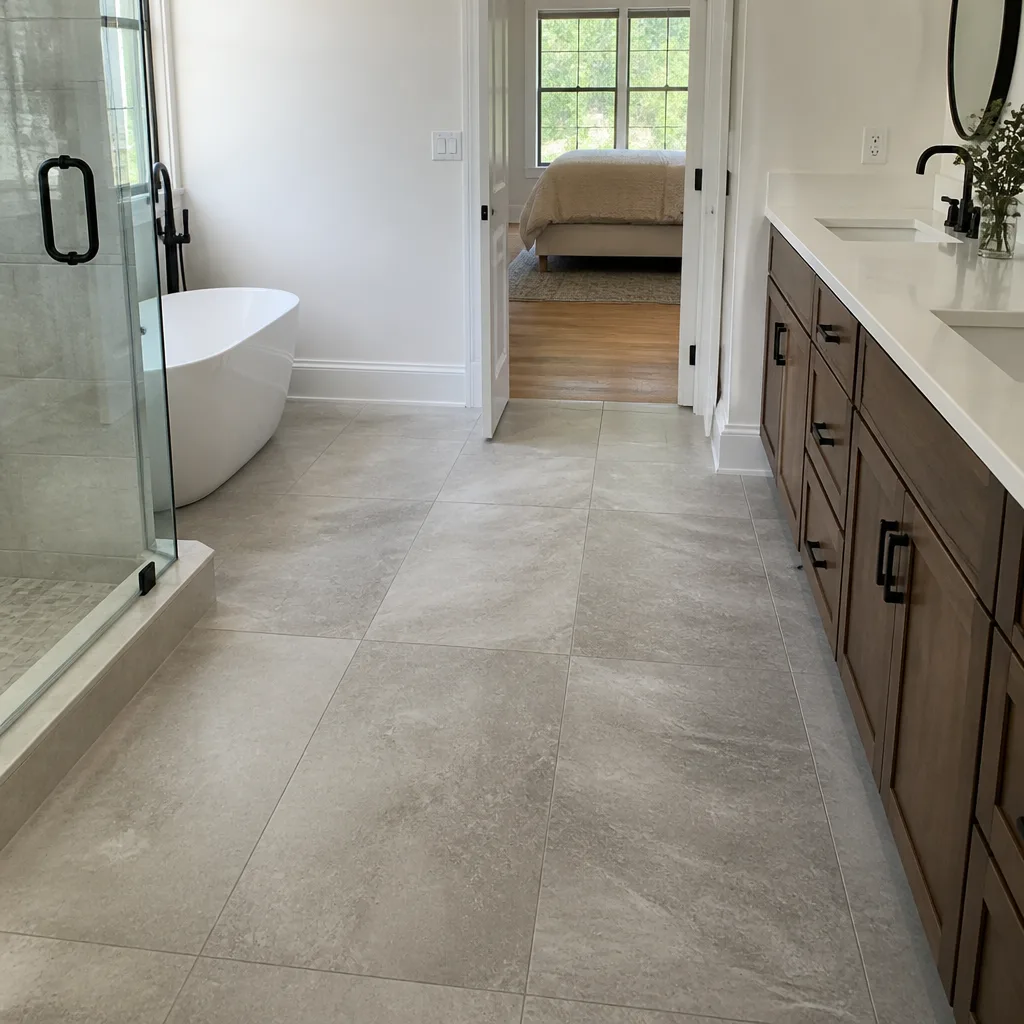 Porcelain tile
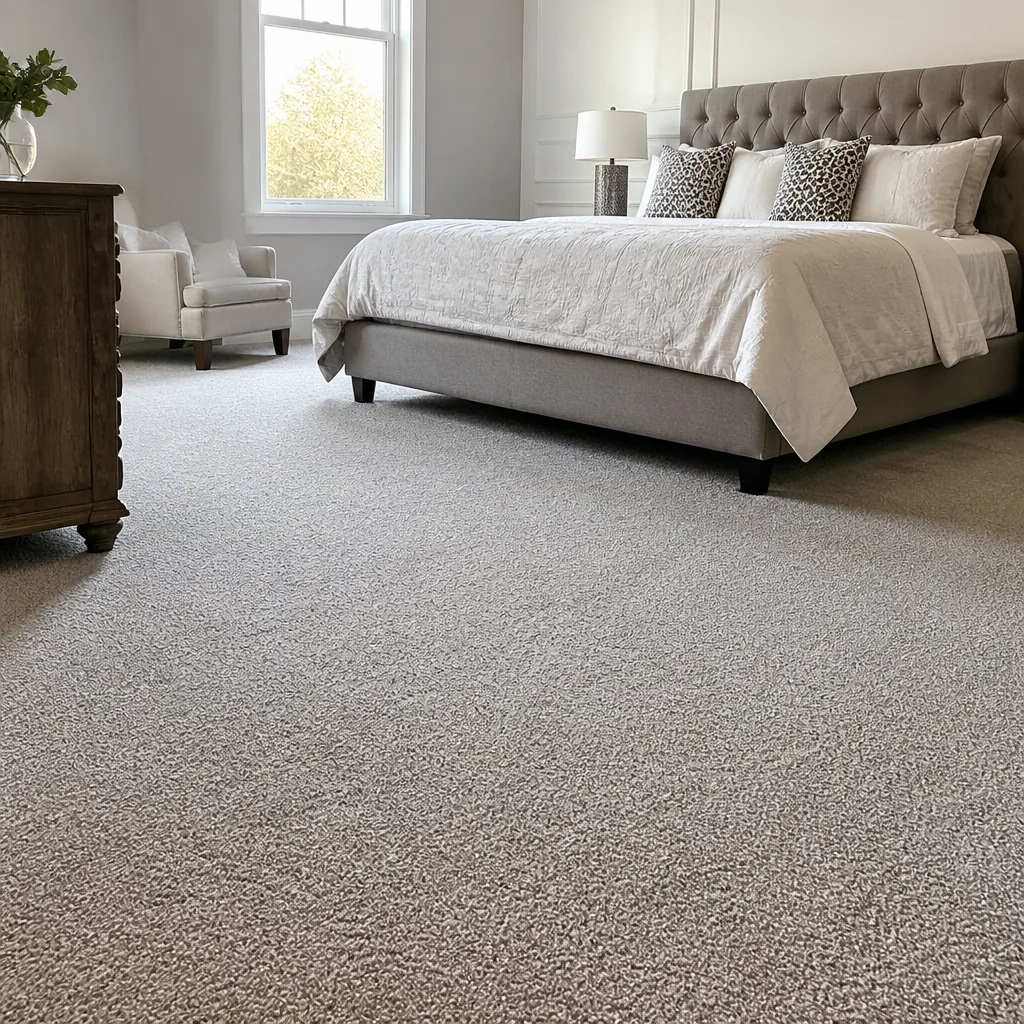 Carpet
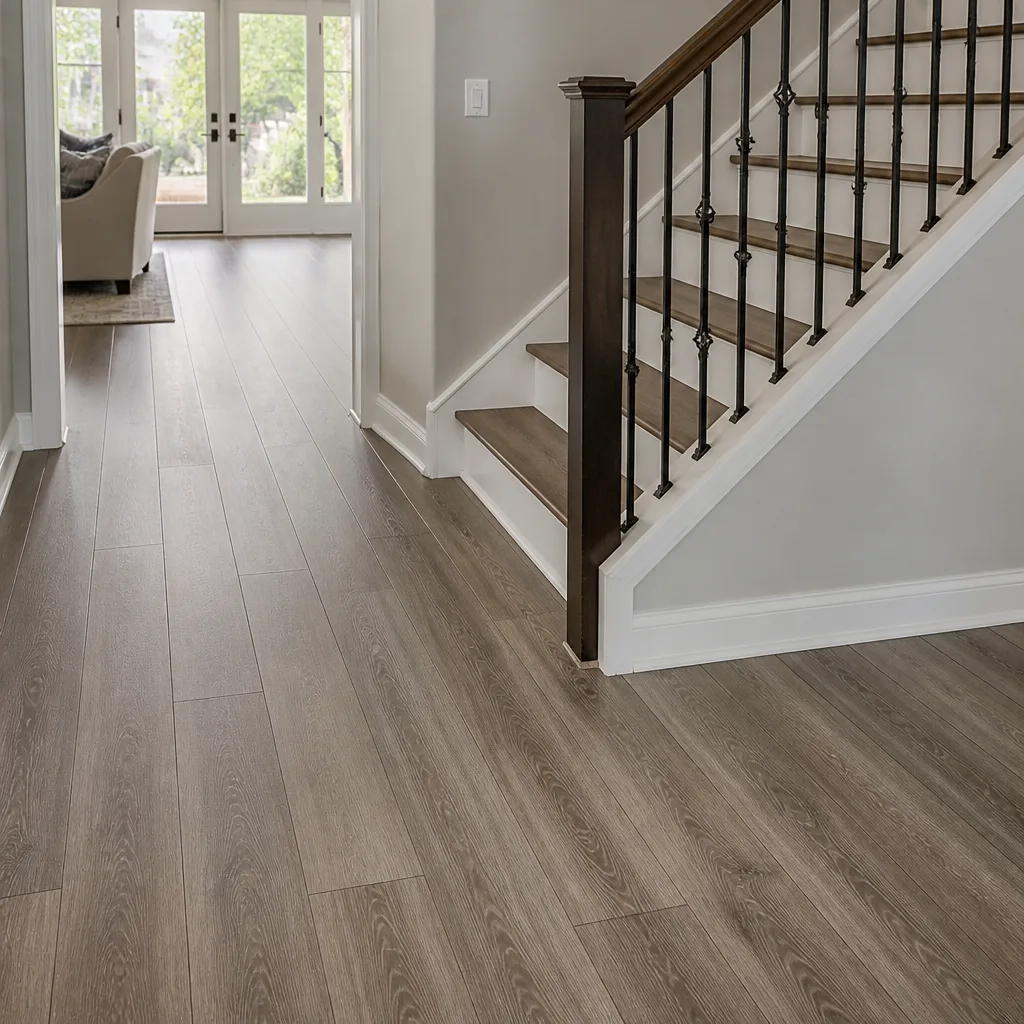 Shaw
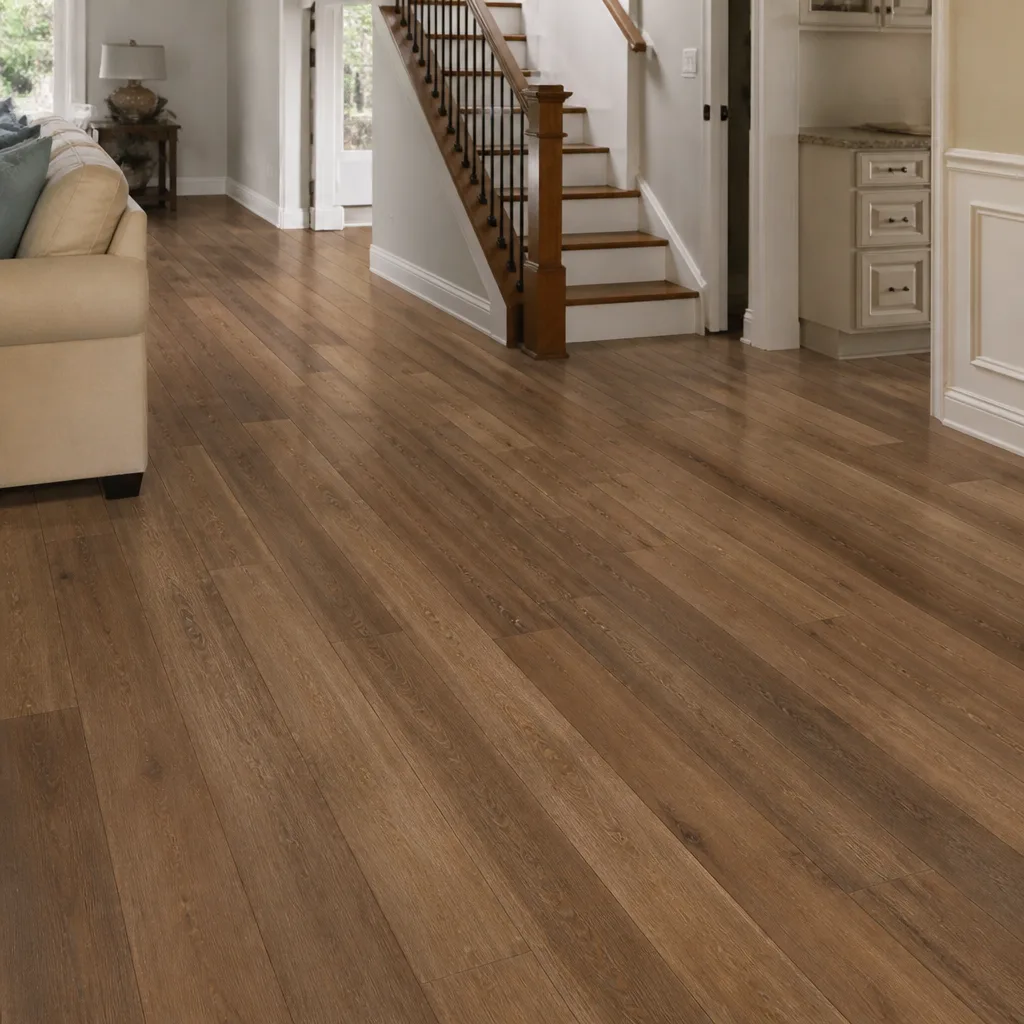 Mohawk
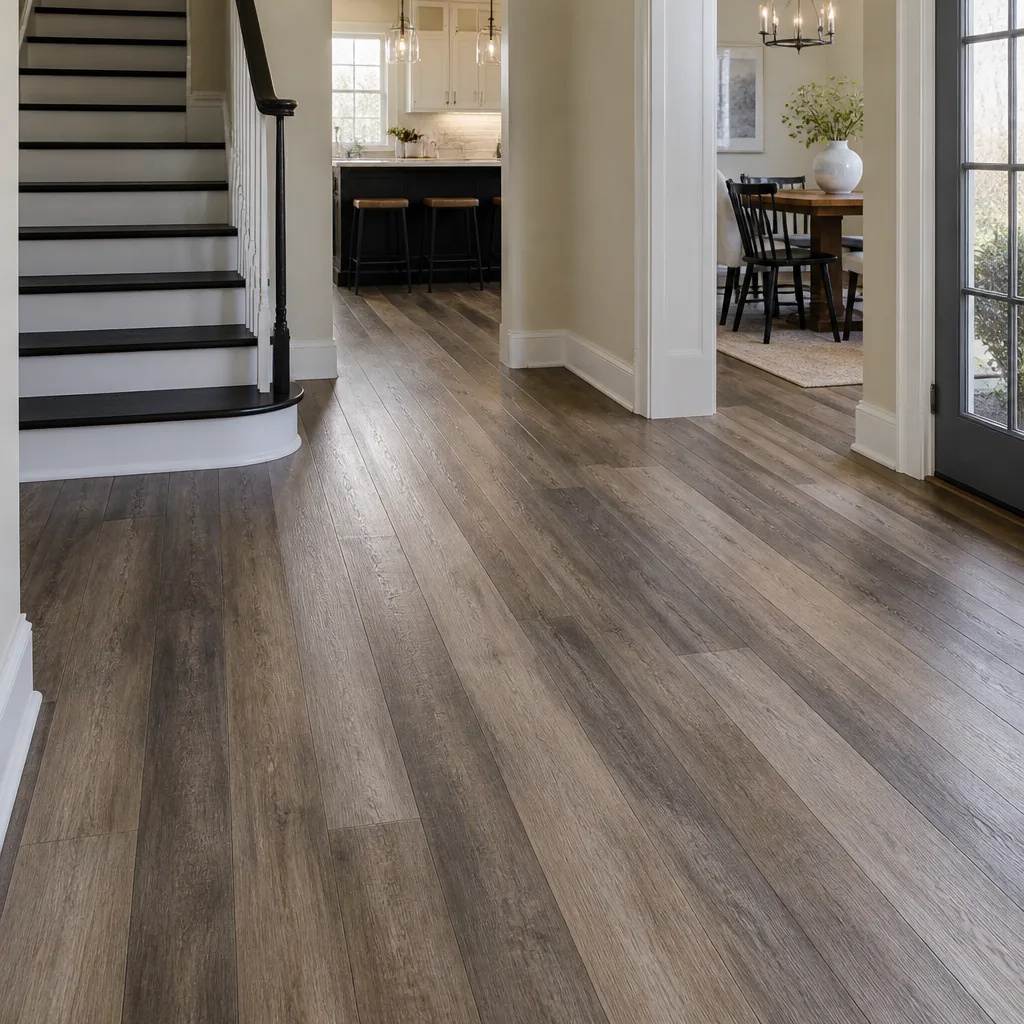 COREtec
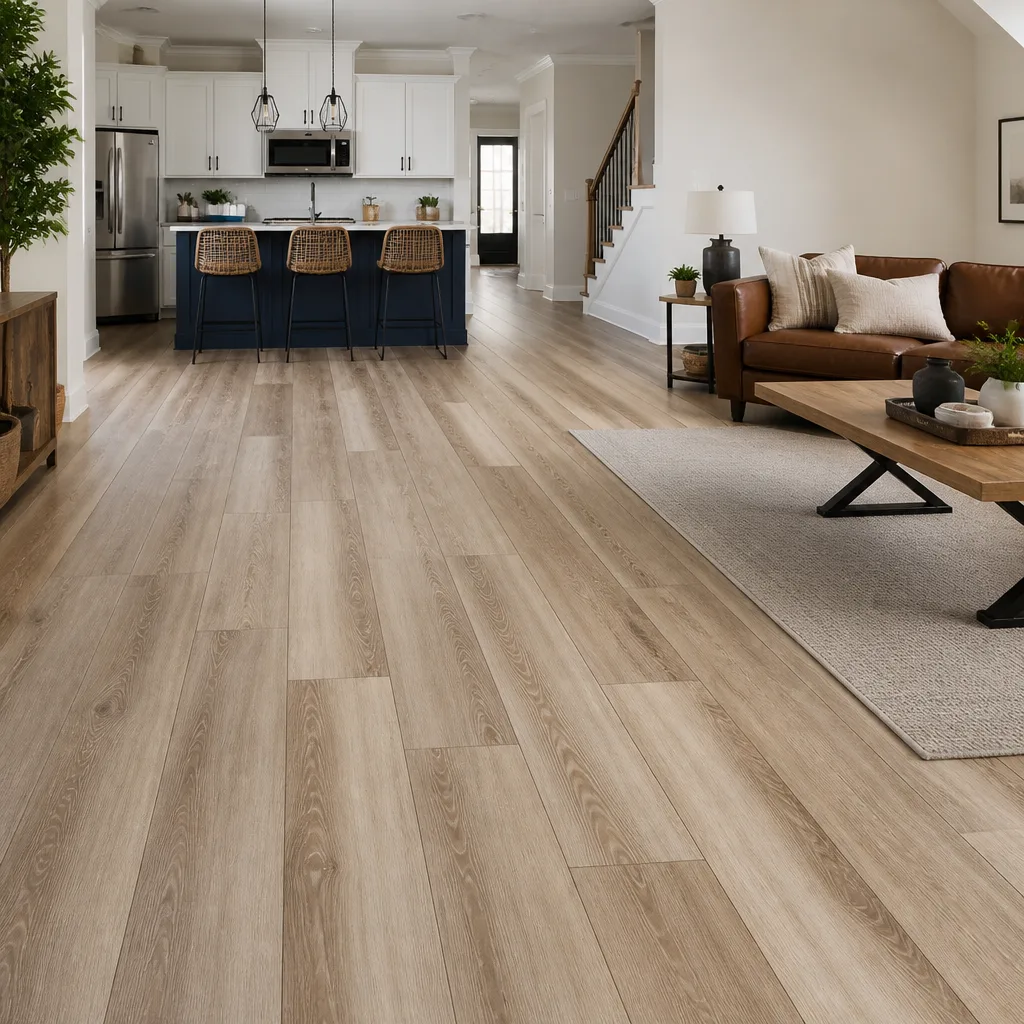 Pergo
Free in-home measure and written estimate: Shaw, Mohawk, COREtec and Pergo lines compared on your own rooms, with carpet, tile, vinyl plank, laminate and hardwood laid out side by side
Get your free estimateHardwood, Vinyl Plank, Laminate or Tile: How Enterprise Homeowners Decide
Most flooring advice starts with a photo. The homeowner scrolls through wide-plank oak and gray luxury vinyl, picks a favorite, and then asks what it costs. That order is backwards, and in Enterprise it can cost you a floor. Solid hardwood can cup and gap on a concrete slab, not because the wood is bad, but because slab moisture and the humidity swings that come with HVAC-driven living work against it. Nobody at the big-box counter will mention that before you pay. This guide gives you the decision framework that actually holds up in Southern Nevada homes: subfloor type, moisture sources, how you use the room, and what a future buyer will pay for. By the end you’ll know which of the four main flooring categories fits your house, and why.
Quick Answer
The right floor for an Enterprise home comes down to what’s under it and how much moisture it sees, not which material looks best in a showroom. If you have a wood subfloor and dry rooms, hardwood or engineered wood is a strong long-term choice. On slab-on-grade, luxury vinyl plank and tile handle moisture far better. Laminate sits in the middle and struggles most at edges when water reaches it. Match the material to your construction first, then to your budget and style.
Styles & brands we work with
- Hardwood
- Engineered hardwood
- Luxury vinyl plank
- Laminate
- Porcelain tile
- Carpet
- Shaw
- Mohawk
- COREtec
- Pergo
Table of Contents
- Start with your subfloor, not the showroom
- Moisture sources in an Enterprise home
- Hardwood and engineered wood: when they earn their keep
- Luxury vinyl plank: the slab-friendly workhorse
- Laminate: strengths, limits, and the desert edge problem
- Tile: where it wins and where it loses
- Reading durability ratings without the marketing fog
- Resale math in the Southern Nevada market
Start with your subfloor, not the showroom
Before you compare a single plank, find out what your floor sits on. In Enterprise and across the Las Vegas Valley, you’ll run into three common situations: slab-on-grade where the concrete is poured at ground level, a raised wood subfloor over a crawl space or framing, and second-story wood framing. Each one narrows the field. The material that’s perfect upstairs can be a poor match in a hallway over concrete.
Here’s the working matrix we use when we walk a home during an estimate:
- Slab-on-grade: Tile and luxury vinyl plank are the natural fits. Engineered wood can work when the slab is tested and protected. Solid hardwood is risky. Laminate can work but needs a moisture barrier and careful attention at edges.
- Wood subfloor, ground level: All four categories are on the table. Solid hardwood, engineered wood, laminate, and plank all have a path, provided the subfloor is flat and dry.
- Second-story wood framing: The widest range. Hardwood, engineered, laminate, and plank all install well. Tile is possible but adds weight, which matters in some structures.
- Basements or sunken rooms: Rare in Enterprise, but if you have one, treat it like a slab and lean toward tile or vinyl plank.
The step that makes this real is a moisture test on the concrete and a flatness check on the subfloor. Without those two readings, any material recommendation is a guess. If the slab is reading wet, we address it before a single box is opened.
Moisture sources in an Enterprise home
Southern Nevada is dry, and it’s easy to assume moisture is a non-issue. It isn’t. Homes here see moisture from three main sources, and each one changes which flooring makes sense.
- Slab moisture. Concrete holds water and releases it slowly. A slab poured at grade can wick moisture upward for years. This is the number one reason solid hardwood fails on a slab, and it’s invisible until the boards start to cup.
- HVAC-driven humidity swings. Air conditioning in the summer keeps indoor humidity low, but the transition seasons and winter heating change it. Wood expands and contracts with those swings. Engineered products handle them better than solid, and plank and tile are largely indifferent.
- Household water events. A slow leak under a sink, an overflowing tub, a spilled bucket, or a swamp cooler line. These are the events that separate water-resistant from vulnerable. Laminate is the most exposed at its edges, where moisture can swell the core.
If you’ve had any water event in the last several years, mention it during the estimate. It changes what we recommend. Tile and premium luxury vinyl plank from brands like COREtec and Karndean are built for rooms where water is part of daily life. Hardwood and laminate want to stay dry.
Hardwood and engineered wood: when they earn their keep
Wood is the material buyers still recognize as premium, and it’s the one that can be refinished rather than replaced. That refinnishability is the quiet advantage. A solid hardwood floor that’s seen better days can often be sanded and refinished back to life, which is a smart homeowner’s move when the wood underneath is still sound.
Where wood wins:
- Wood subfloors in living rooms, dining rooms, bedrooms, and hallways
- Homes where you plan to stay long enough to enjoy the character
- Rooms that stay dry and have stable indoor humidity
- Cases where an existing wood floor is a candidate for refinishing rather than replacement
Where wood loses: slab-on-grade without proper testing and protection, bathrooms, laundry rooms, and any room with a history of water trouble. Solid hardwood on a slab that’s reading wet is a roll of the dice. Engineered wood gives you more tolerance there, but it still needs the slab tested and a moisture barrier in place.
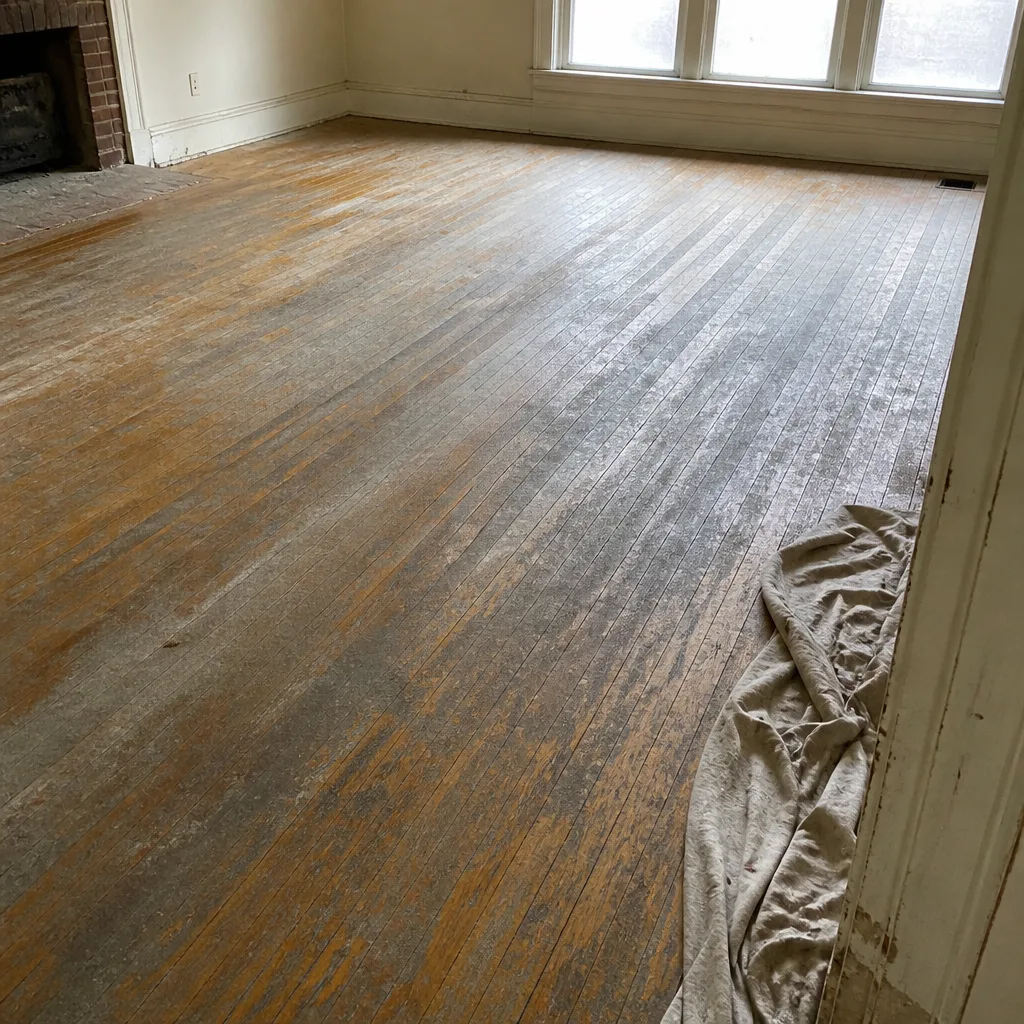
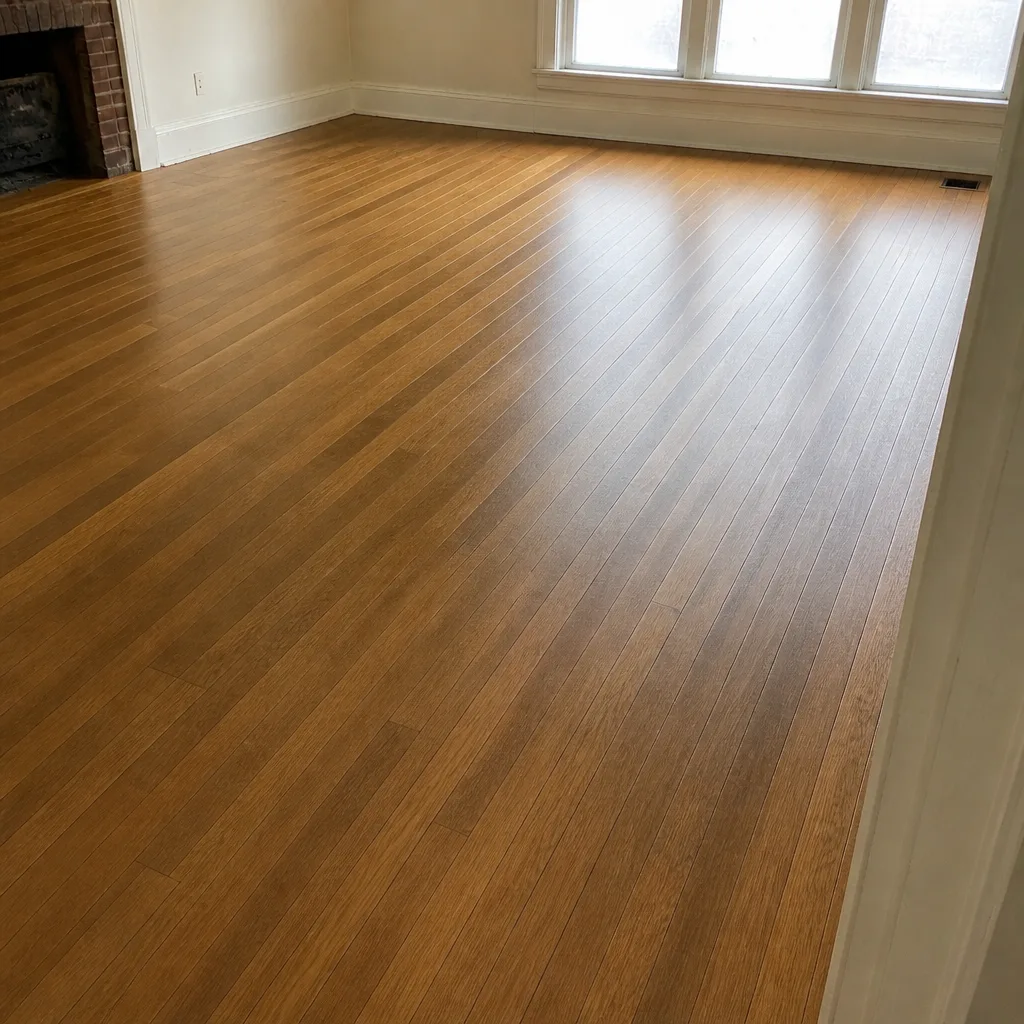
If you already have wood floors in decent shape, refinishing is often the sensible call. We refinish hardwood as a dedicated service, which means we’re evaluating the wood’s thickness and condition rather than pushing you toward replacement. Whether a specific floor can be refinished depends on how much wood is left to sand, and that gets checked at the estimate visit.
Luxury vinyl plank: the slab-friendly workhorse
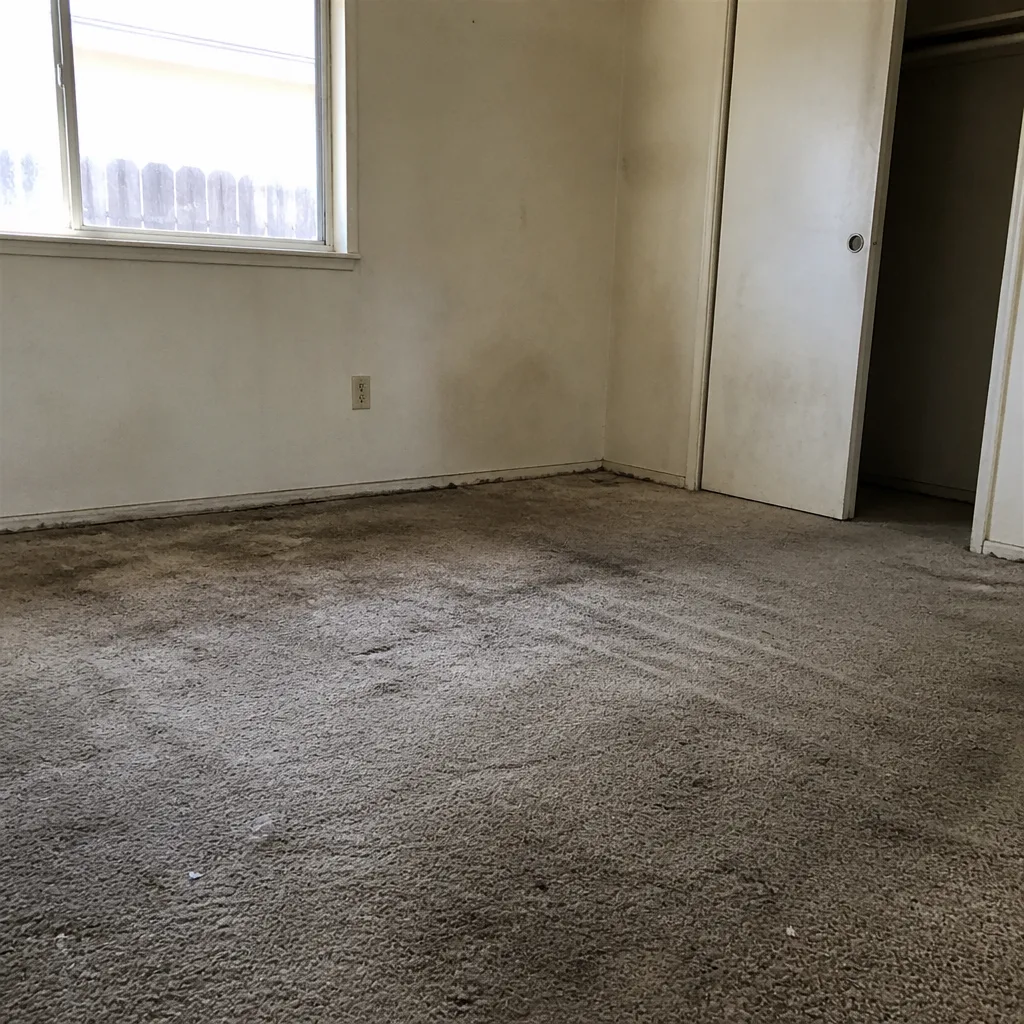
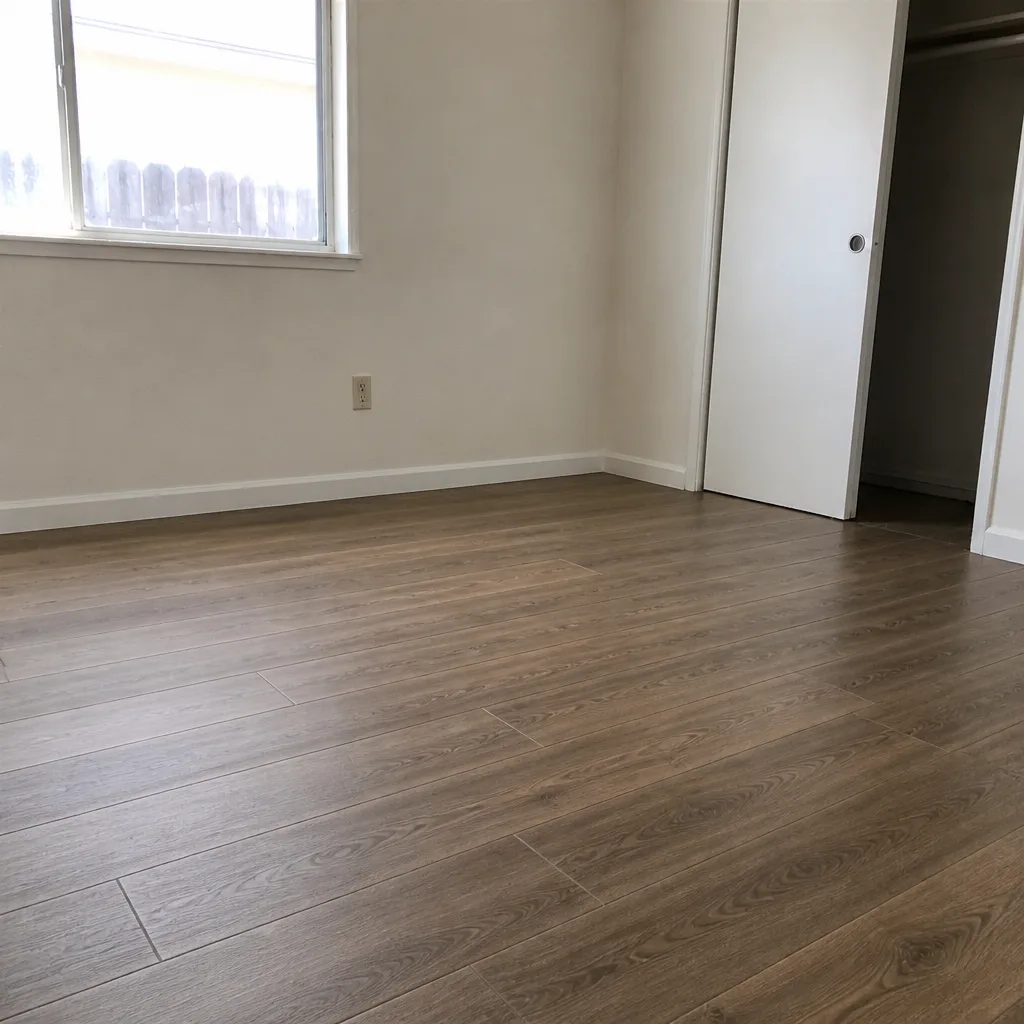
Luxury vinyl plank is the category that’s grown the fastest in Southern Nevada, and for good reason. It’s water-resistant, it installs over concrete with the right prep, and it handles the temperature swings that come with a desert climate. Premium lines from COREtec and Karndean demand precise installation, and that precision is what separates a floor that holds up from one that lifts at the seams.
When luxury vinyl plank is the right call:
- Slab-on-grade where the slab is dry or can be protected
- Kitchens, laundry rooms, hallways, and rooms off a pool
- Homes where you want a wood look without the wood maintenance
- Rental properties and secondary rooms where durability matters more than prestige
One clarification: luxury vinyl plank is water-resistant, not waterproof in the sense that standing water can sit on it indefinitely. A spill wiped up promptly is fine. A leaking appliance that goes unnoticed for days is still a problem, and the subfloor underneath is still exposed to that water. Plank handles moisture well; it doesn’t eliminate the need to deal with the source.
Plank also has limits. Its refinishability is essentially nil. Once a plank is scratched or damaged, it’s replaced, not sanded. That’s a fair trade for the durability and the moisture tolerance, but it’s worth knowing before you commit a whole house to it. For more on what the install involves, see our Flooring Installation Enterprise overview of the work we do.
Laminate: strengths, limits, and the desert edge problem
Laminate has a reputation for being a budget compromise, but the better lines from brands like Pergo and Mannington are genuinely good floors when they’re installed in the right place. The catch is that laminate is the most vulnerable of the four categories to water at its edges. In a dry desert climate, that’s rarely a daily problem, but it’s a real one when a water event happens.
Where laminate is a reasonable fit:
- Bedrooms, living rooms, and hallways over a wood subfloor
- Homes where the look and the price point matter and water exposure is low
- Rooms where you want a wood look at a lower entry cost than hardwood
Where laminate loses: bathrooms, laundry rooms, kitchens near the sink or dishwasher, and any room with a history of moisture. Laminate’s core can swell if water gets into the edges, and once it does, the board doesn’t come back. It’s also not a refinishable floor. When the surface wears or a board is damaged, the answer is replacement, not restoration.
The edge-swelling issue is the one homeowners underestimate. A slow drip behind the refrigerator, a mop bucket that tips, a pet water bowl that’s constantly splashed. In a laminate floor, those are the events that shorten its life. If the room has any of that going on, luxury vinyl plank is usually the better answer.
Tile: where it wins and where it loses
Tile is the most forgiving floor in a wet room and the least forgiving on your feet. It’s also the floor with the widest gap between a good installation and a bad one. Large-format tile and specialty patterns demand real technique, and that’s where professional-grade sourcing matters. Working with Daltile gives us access to a professional tile line that general handymen typically don’t stock or know how to install cleanly.
Where tile wins outright:
- Bathrooms, showers, laundry rooms, and entryways
- Kitchens, especially near the sink and dishwasher
- Any space where water is a daily reality
- Covered patios and sunrooms where indoor-outdoor transition matters
Where tile loses to plank:
- Comfort. Tile is hard and cold underfoot compared with plank or carpet.
- Installation complexity. Tile takes more time, more prep, and more skill than plank, which shows up in the installation cost.
- Grout maintenance. Grout is the ongoing chore that tile owners learn to live with. It needs sealing and periodic cleaning, and it’s the part of the floor that shows its age first.
- Whole-home use. Running tile through an entire house is uncommon in Enterprise for a reason. It’s a lot of hard surface to live on.
Tile is also the slowest of the four to install, and the schedule gets set at the estimate rather than promised over the phone. For a closer look at how we handle it, see our tile flooring installation page.
Reading durability ratings without the marketing fog
Spec sheets are a marketing tool as much as a technical one. The trick is knowing which numbers actually tell you something about how the floor will hold up in your house. Here’s how to read them without getting lost.
- Wear layer (vinyl plank). The wear layer is the clear top film that takes the abuse. A thicker wear layer generally means more durability in a busy household. Ask what it measures in mils, not what the box calls it.
- AC rating (laminate). Laminate is rated from AC1 to AC5 for traffic and use. Higher numbers represent heavier traffic. Match the rating to the room, not to the best number on the shelf.
- Janka hardness (wood). Janka measures how hard a wood species is. It’s useful for comparing wood to wood, and misleading when used to compare wood to vinyl or tile.
- PEI rating (tile). PEI rates tile’s resistance to surface wear on a scale. Most residential floor tile sits in the middle of the scale, which is where it needs to be.
- Refinishability. No spec sheet calls it out, but it’s the rating that matters most long-term. Wood can be refinished; plank, laminate, and tile are replaced.
Ignore exaggerated claims like “scratch-proof” and “lasts forever.” No floor is either. What you want is a product that fits the room, installed correctly, with the subfloor ready to receive it.
Resale math in the Southern Nevada market
Hardwood used to be the automatic winner in resale conversations, and in many markets it still is. Southern Nevada is a bit more pragmatic. Buyers here walk into homes with luxury vinyl plank and don’t turn their noses up. In fact, in a market with a lot of slab construction and a lot of pool-adjacent rooms, plank’s water resistance reads as sensible rather than cheap.
What we’ve seen in our experience: solid hardwood still adds perceived value in the main living areas, but a whole house of hardwood isn’t the automatic investment it was a decade ago. Buyers weigh maintenance, moisture risk, and pets more heavily now. A well-installed premium plank (COREtec or Karndean, for example) in the main living areas and tile in the wet rooms often reads as smart and low-effort, which in this market is a selling point.
The honest answer on resale is that it depends on your house, your neighborhood, and how much of the floor is hardwood versus something else. If the numbers matter to you, ask about it at the estimate. We’ll talk through the trade-off without overselling either direction.
Common Mistakes to Avoid
- Choosing material before checking the subfloor. Picking the plank in the showroom and then discovering a wet slab is a costly order to undo. Test first, choose second.
- Assuming dry desert air means no moisture concerns. Slab moisture and HVAC-driven humidity swings are real in Enterprise, and they’re the source of most hardwood problems we see.
- Putting laminate in a wet room. Laminate’s edges swell when water reaches the core, and that damage isn’t reversible. Keep it in dry rooms.
- Buying on brand alone. A premium plank installed poorly is a worse floor than a mid-range plank installed correctly. Installation craft is half the product.
- Skipping the refinish question on existing hardwood. Homeowners often default to replacement when a refinish would restore the floor and preserve the original character for less.
- Forgetting grout maintenance in a tile decision. Grout is part of the floor’s life. If a sealed, low-effort floor matters to you, know what tile commits you to.
- Choosing tile for a whole house without living on it first. Tile is hard and cold underfoot. In an Enterprise home with a lot of hard surfaces already, that’s a daily experience, not a design detail.
See the difference
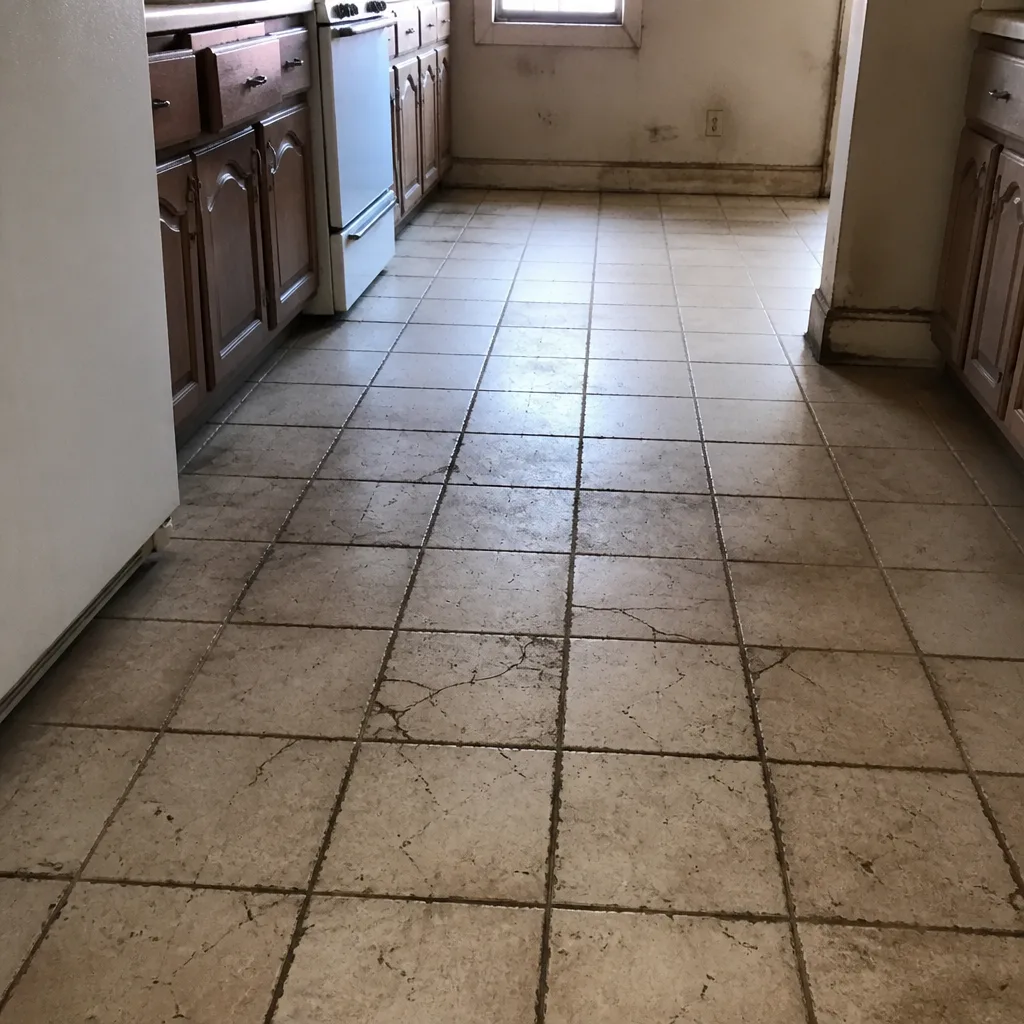 Before
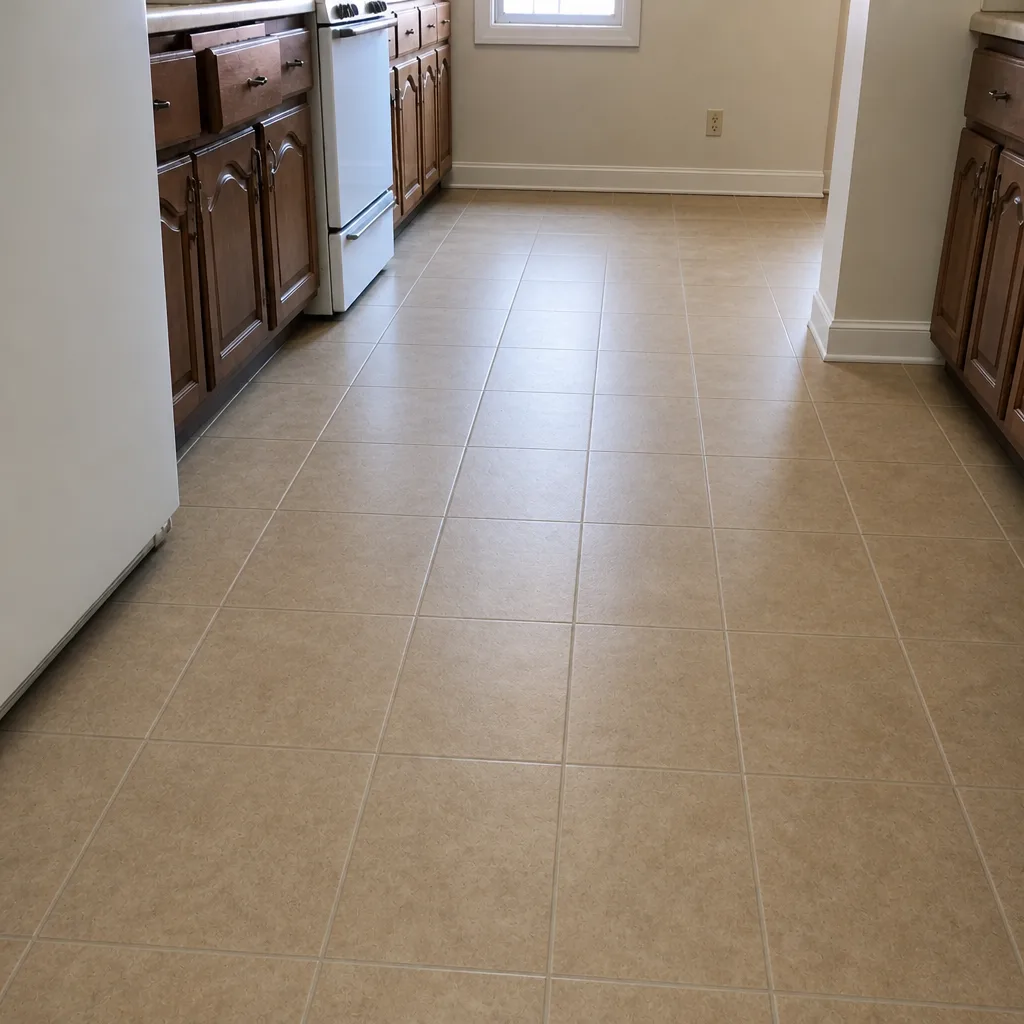 After
 Before
 After
 Before
 After
When to Call a Professional
Some flooring jobs are genuinely DIY territory. Most aren’t. Call a professional when you’re working over a slab that hasn’t been moisture tested, when the subfloor needs prep or flattening, when the material is large-format tile or premium luxury vinyl plank that demands precision, or when you’re refinishing existing hardwood and need to know whether the wood can take it. Call when you’re moving a whole house across multiple materials and want one accountable source rather than three different installers. Call when the floor is going into a wet room and the wrong choice is expensive. Flooring Installation Enterprise offers free estimates in Enterprise. Call (844) 560-4386 to schedule yours. We answer 24/7. Fast dispatch from 7am to 7pm, Sunday through Friday.
Frequently Asked Questions
It depends on your subfloor and moisture exposure. On a wood subfloor in dry rooms, hardwood is a strong long-term choice with refinishability on its side. On slab-on-grade, luxury vinyl plank is the safer fit because it handles moisture better. The right answer for your house comes from a subfloor and moisture check at the estimate.
Sometimes, but it requires testing and protection first. Solid hardwood on a wet slab is risky, and engineered wood gives you more tolerance when the slab is measured and a moisture barrier is in place. Without a moisture test, we’d advise against it. Call (844) 560-4386 to schedule a free estimate where the slab gets checked.
Because desert air doesn’t prevent water events. A leak, a spill, or a splashing pet bowl can reach the edges of a laminate board, and the core swells when it does. Once that happens, the board doesn’t come back. Keep laminate in dry rooms and use plank or tile where water is part of daily life.
Both work, and the choice comes down to priorities. Tile wins on water tolerance and durability, and it’s the classic kitchen floor. Plank wins on comfort underfoot and usually on installation cost, and it handles the occasional spill. Grout maintenance is the tile trade-off. Either one, installed correctly, is a reasonable kitchen floor.
Often yes, but it depends on how much wood is left to sand and the floor’s condition. We refinish hardwood as a dedicated service, and the check happens at the estimate visit. If the wood is sound, refinishing preserves the original character and avoids the cost of replacement. Call (844) 560-4386 for a free estimate.
Compare like to like. Wear layer in mils for vinyl plank, AC rating for laminate, Janka hardness for wood species. Those numbers are useful within their category but misleading across categories. A spec sheet is a starting point, not the whole story, and installation quality matters as much as the number on the box. Our carpet installation team often fields the same question about carpet fiber ratings, and the answer is the same: read the spec, then check the install.
The Bottom Line
Start with what’s under the floor, not what’s on the showroom wall. In Enterprise, slab-on-grade construction and HVAC-driven humidity swings make moisture tolerance a real factor, and that pushes most homeowners toward luxury vinyl plank or tile in the wet and ground-level rooms. Wood subfloors open up hardwood and engineered wood, and refinishing is often the smart move over replacement. Laminate has a place in dry rooms, but its edge-swelling risk and lack of refinishability are worth knowing. Match the material to the room, read the durability ratings with a skeptical eye, and let the installation craft carry the rest. For a full look at how we approach Enterprise homes, or to schedule a free estimate, call (844) 560-4386. We answer 24/7. Fast dispatch from 7am to 7pm, Sunday through Friday.
Written by the team at Flooring Installation Enterprise.