
Last updated November 18, 2026
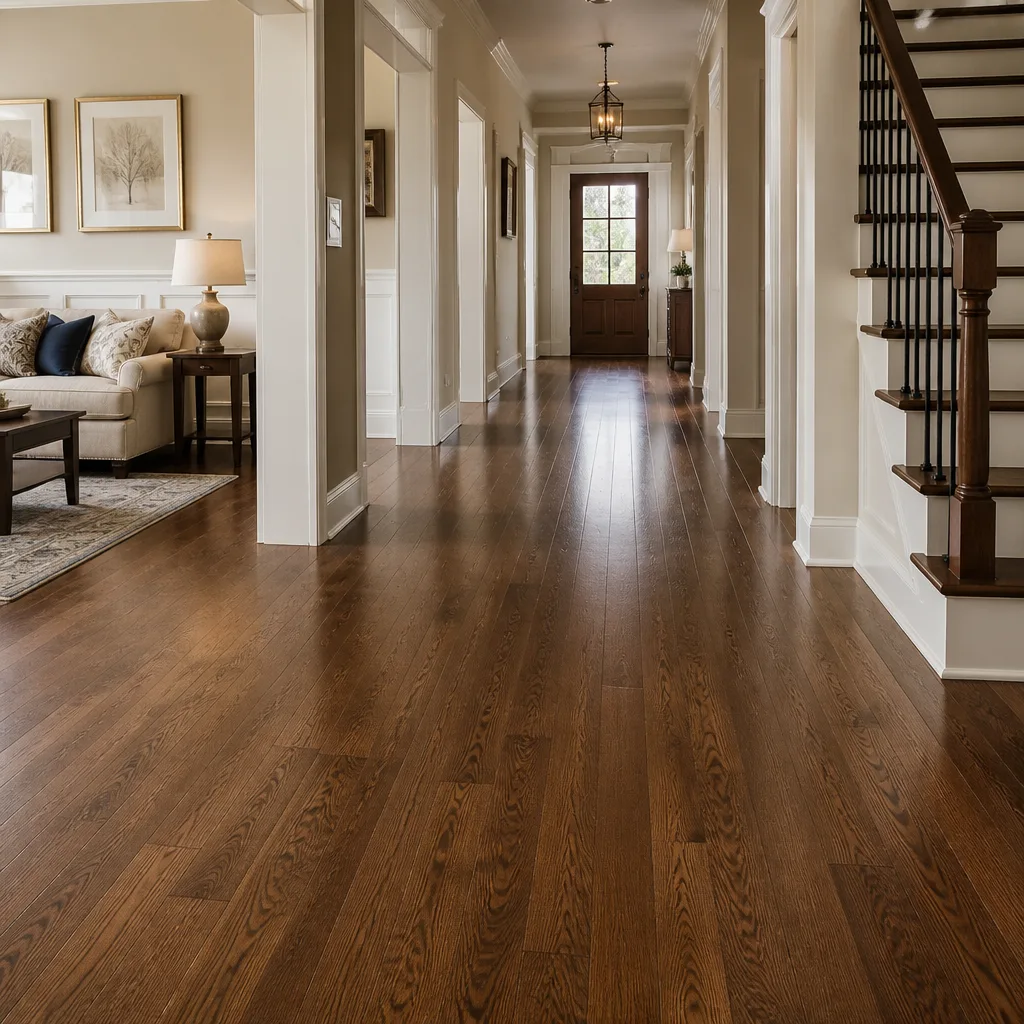 Hardwood
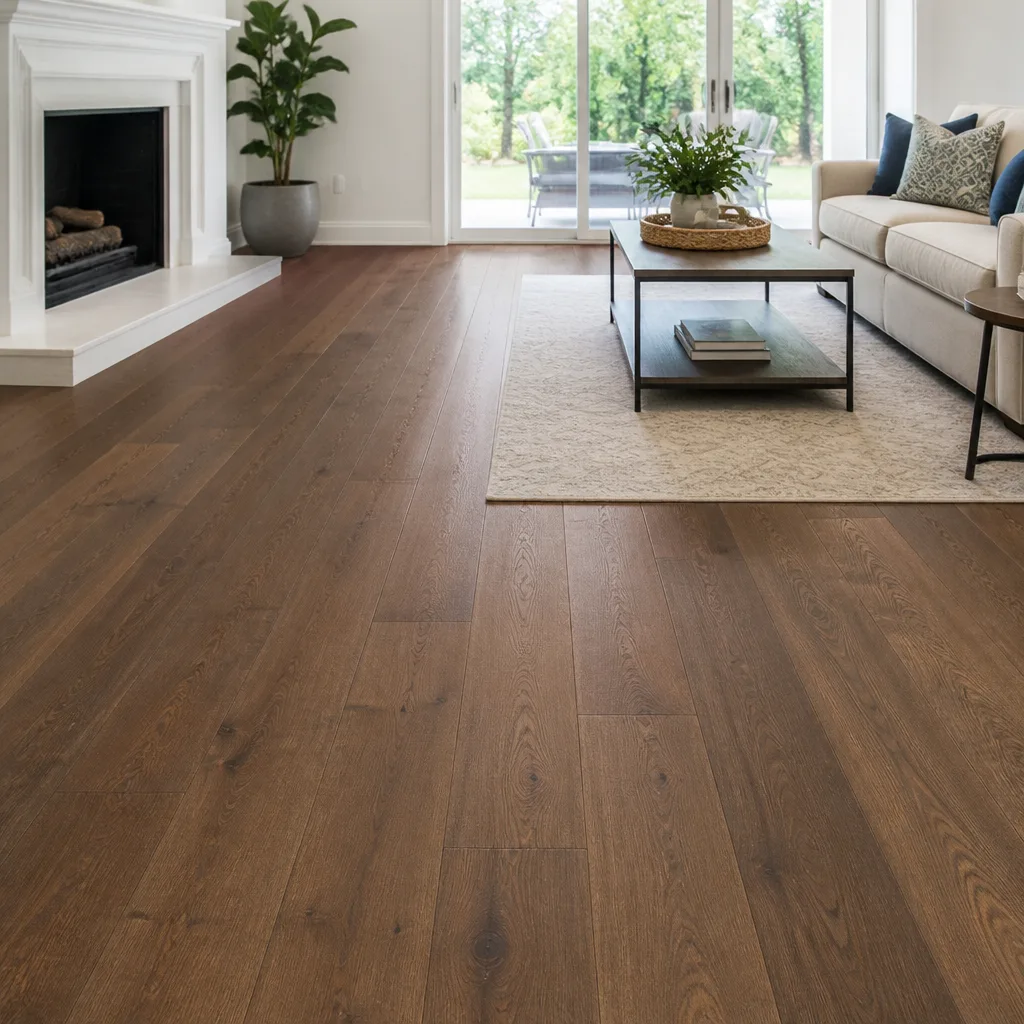 Engineered hardwood
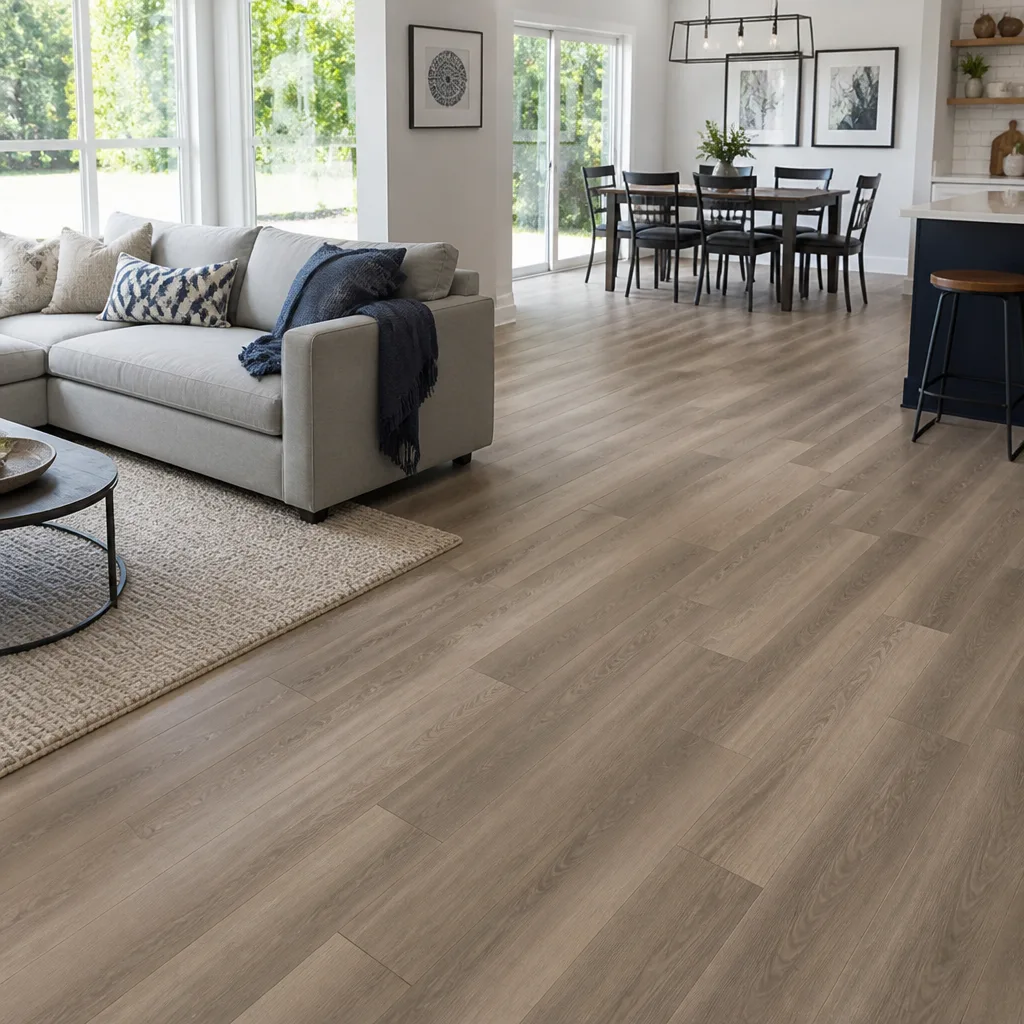 Luxury vinyl plank
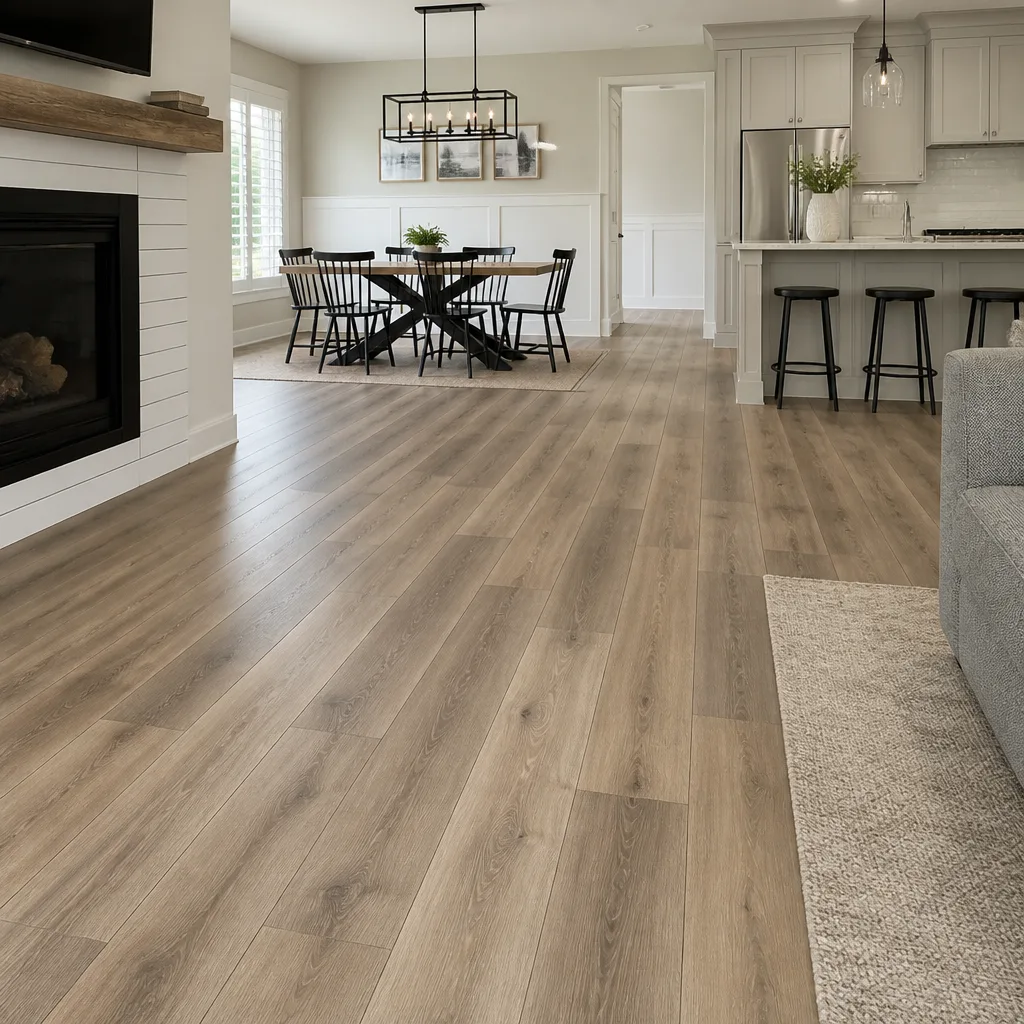 Laminate
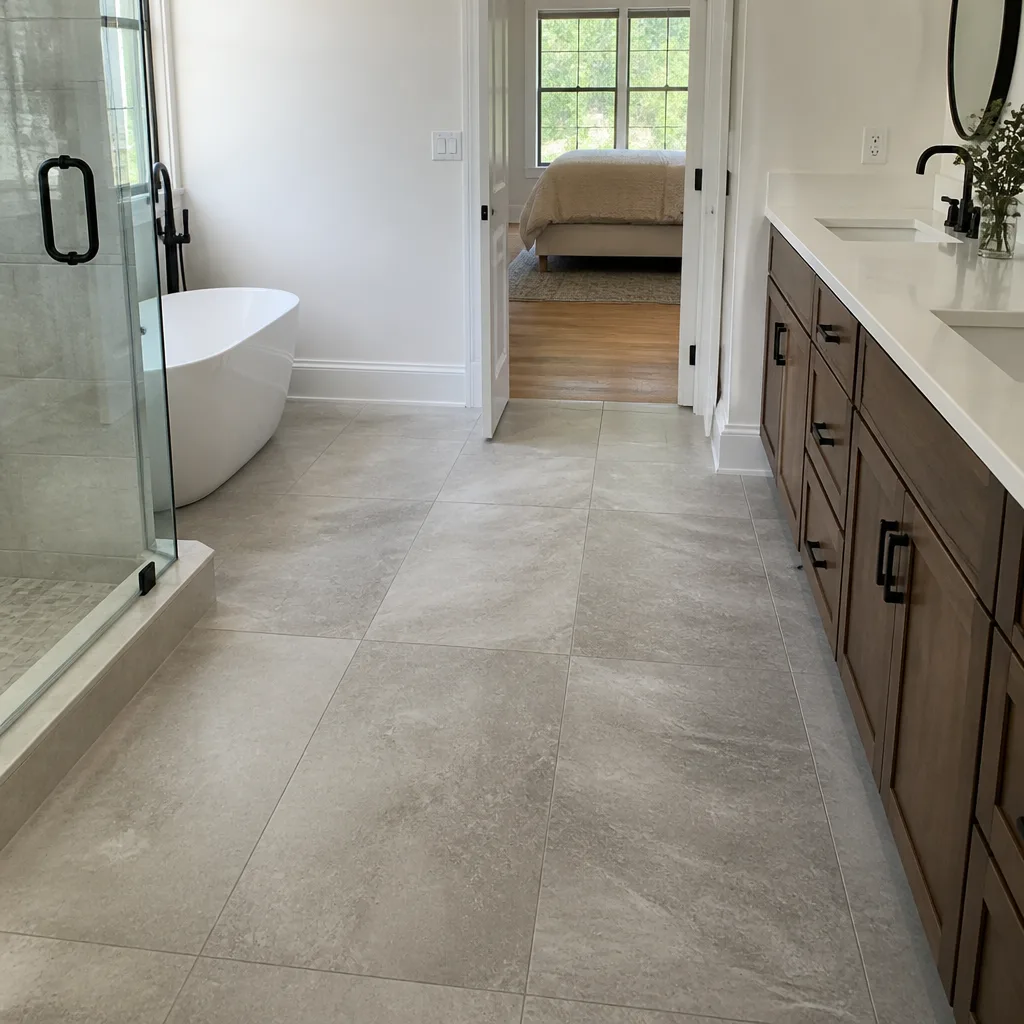 Porcelain tile
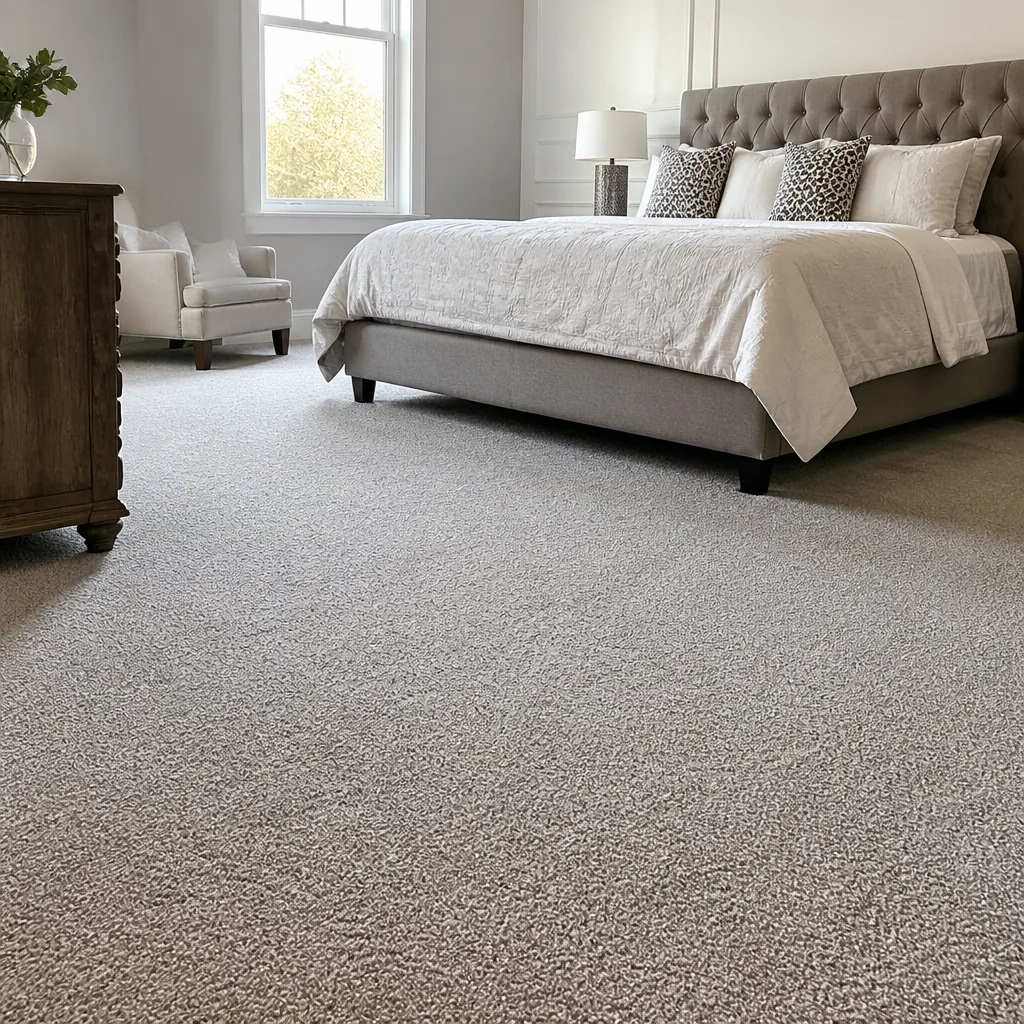 Carpet
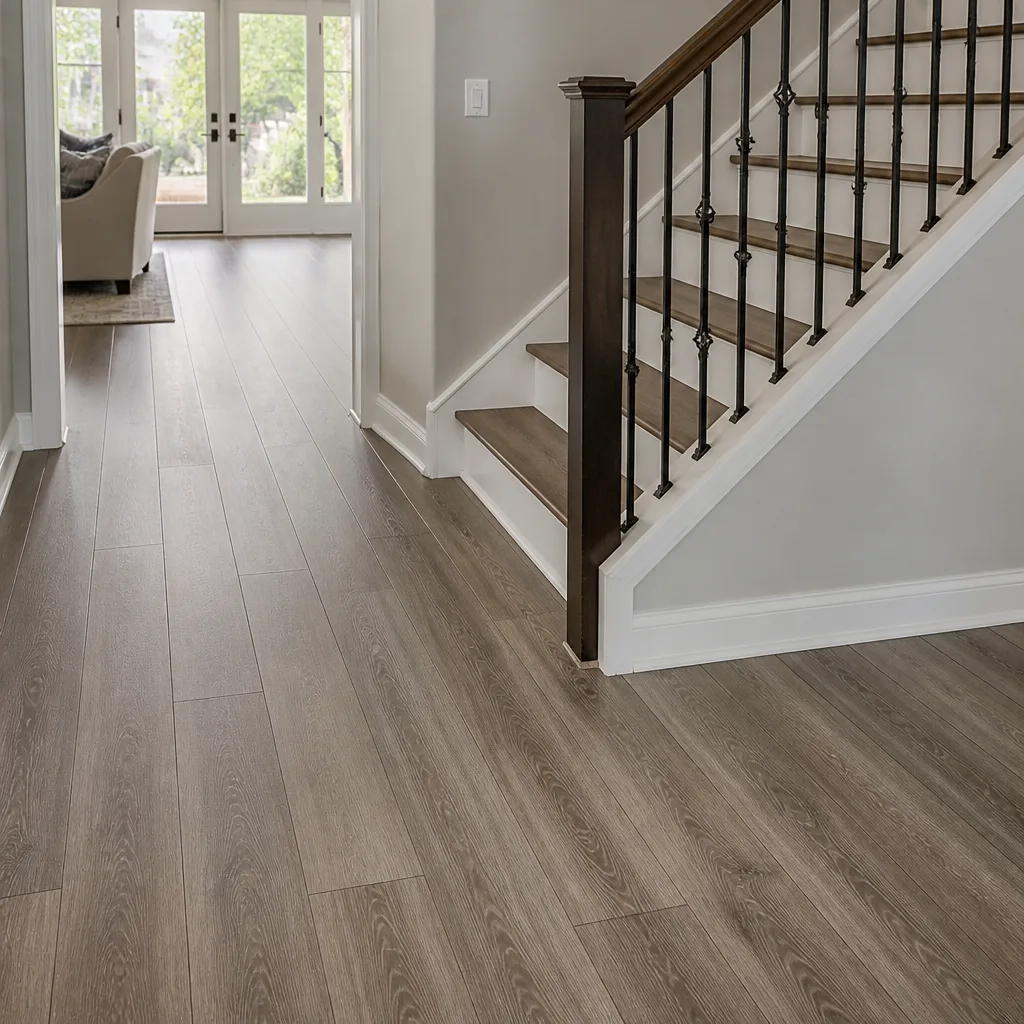 Shaw
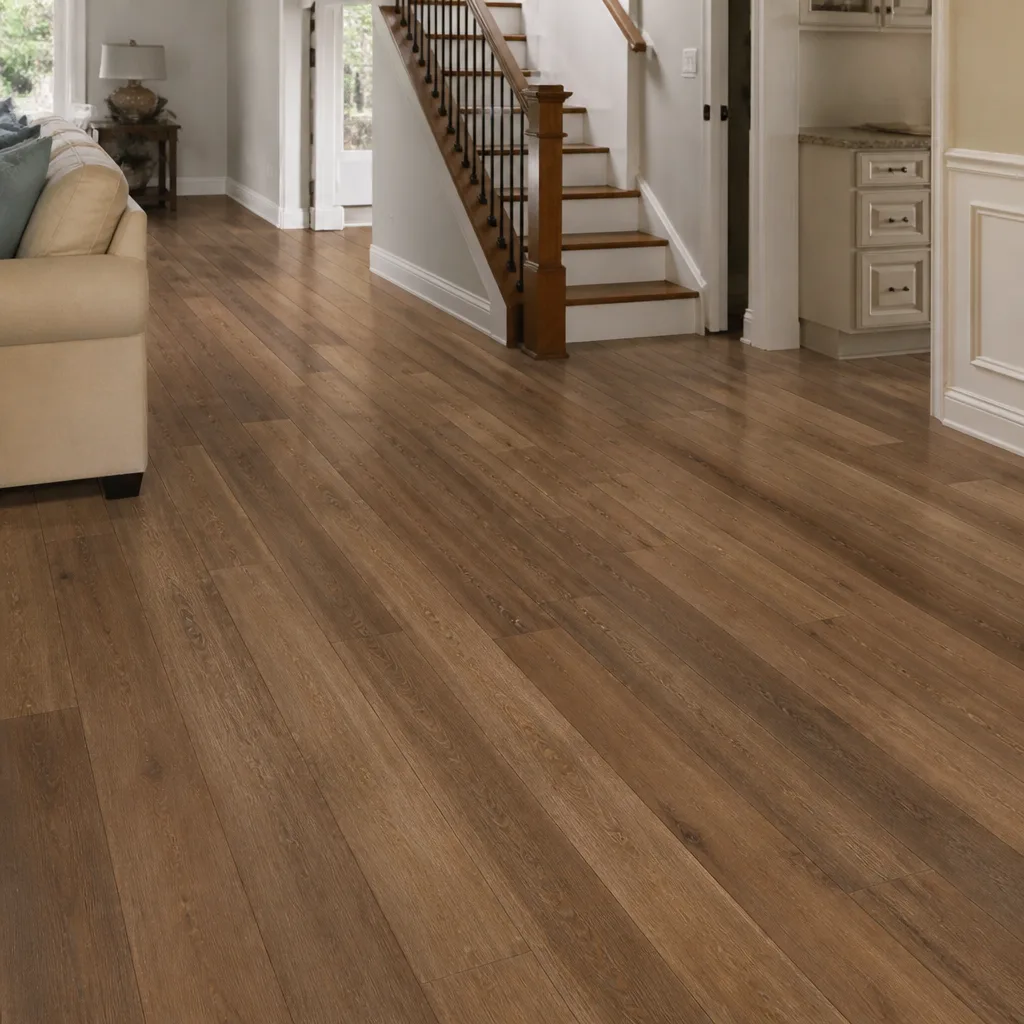 Mohawk
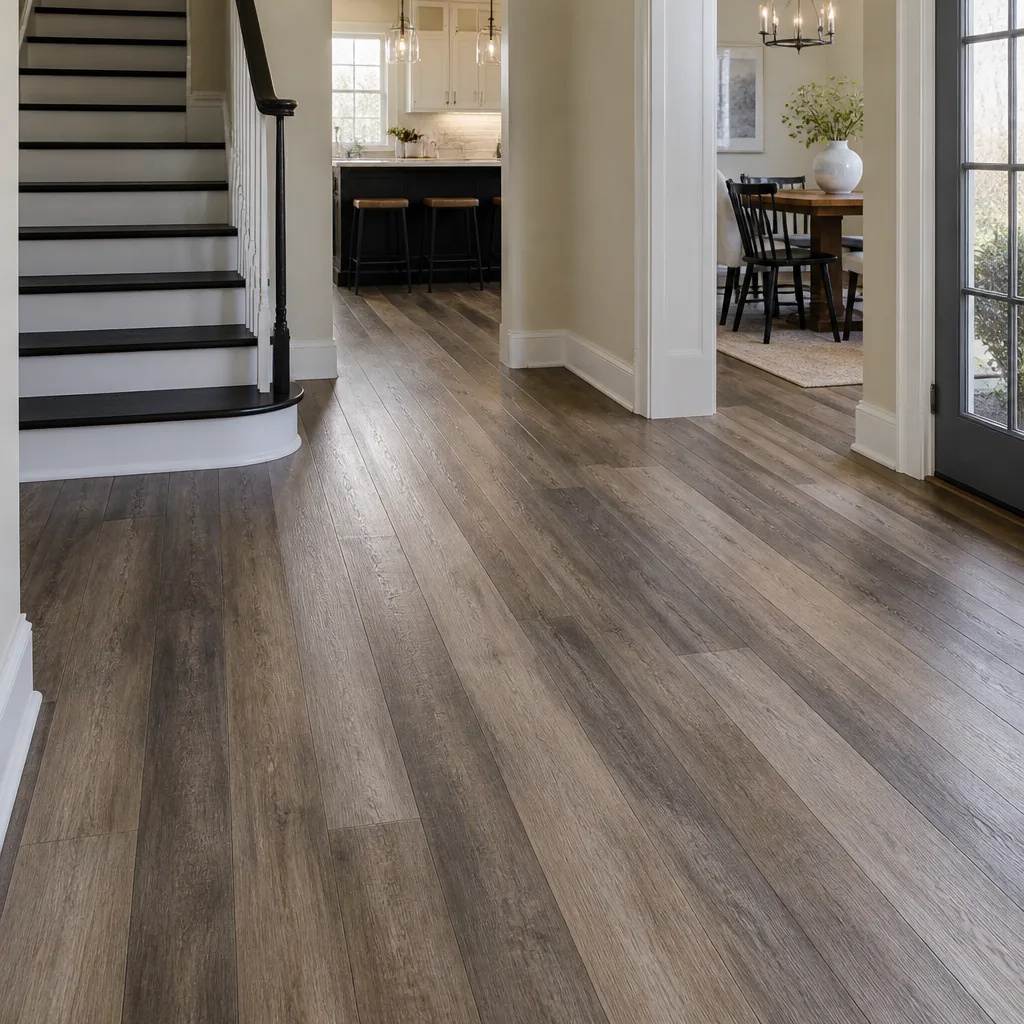 COREtec
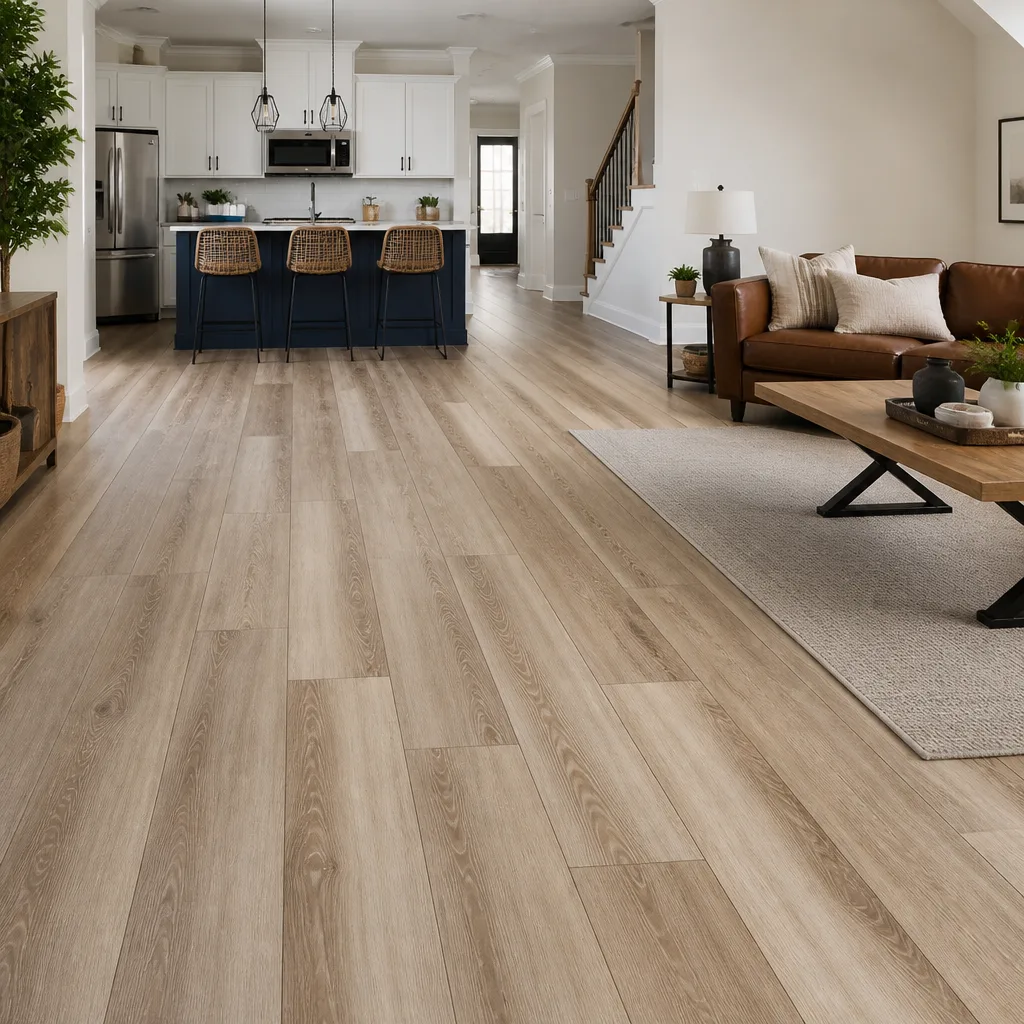 Pergo
Free in-home measure and written estimate: Shaw, Mohawk, COREtec and Pergo lines compared on your own rooms, with carpet, tile, vinyl plank, laminate and hardwood laid out side by side
Get your free estimateFix It or Start Over: Flooring Repair vs Replacement
A patched hardwood floor that a seller lists as “refinished” can still fail a buyer’s inspection if the subfloor beneath it has moisture damage. That’s the part most repair-or-replace advice skips. The surface can look fine while the structure under it is done, and once that’s true, the money you spent on the patch becomes a negotiation problem instead of a solution. The decision isn’t really about whether the scratches bother you. It’s about whether the substrate and the structure can carry another product lifecycle. In this guide, we lay out a diagnostic framework for homeowners in Enterprise and give you the honest math on cost-per-year, the cases where repair clearly wins, and the ones where it quietly costs you more.
Quick Answer
Repair is usually worth it when the damage is localized, the subfloor is sound, and the product is still available. Replacement is the better call when you find soft spots, moisture intrusion, or uneven deflection under the surface, or when the floor is near the end of its product life anyway. Judge by the substrate first, then the cost-per-year, then the resale question. Surface appearance comes last.
Styles & brands we work with
- Hardwood
- Engineered hardwood
- Luxury vinyl plank
- Laminate
- Porcelain tile
- Carpet
- Shaw
- Mohawk
- COREtec
- Pergo
Table of Contents
- The Three-Condition Diagnostic: What’s Under the Floor Matters Most
- How to Calculate True Cost-Per-Year for Repair vs Replacement
- When Repair Wins Outright
- The Discontinued Product Problem
- The Honest Conversation About Resale
- How Enterprise’s Climate and Housing Shape the Decision
- Refinishing vs Replacing Hardwood
- What the Estimate Visit Should Actually Cover
The Three-Condition Diagnostic: What’s Under the Floor Matters Most
Before anyone quotes you a repair, three substrate conditions need checking. If any one of them is present, a surface repair is money that doesn’t hold up, no matter how good the patch looks on day one. In our experience walking through floors in Enterprise, homeowners focus on the visible wear and skip straight to the fix. The visible wear is the last thing to worry about.
The three conditions are:
- Soft spots. If the floor flexes or gives underfoot in a concentrated area, the subfloor or the joist under it has a problem. A patch on top of a soft spot will telegraph through within a season, and on hardwood it can crack along the repair line. Soft spots almost always mean replacement of the affected area, plus repair of whatever is underneath.
- Moisture intrusion. Dark staining at the seams, a musty smell, or a floor that cups or crowns in waves points to moisture. It can come from a slow leak, a slab that hasn’t cured, or ground moisture wicking up through a concrete subfloor. Repairing the visible damage without finding the source just resets the clock. The new material will fail the same way.
- Uneven deflection. Walk across the room and feel for sections that dip or bounce differently from the rest. Deflection tells you the structure is moving under load. Any floor laid over that will develop gaps, pops, or cracked grout sooner than it should, whether it’s tile, engineered wood, or carpet installation over a pad.
If none of these are present, the door is open for repair. If one is, the substrate conversation comes first and the surface conversation comes second. Our technicians have up to 9 years of experience, and the pattern is consistent: a repair that ignores a substrate problem costs twice because you pay for the patch and then pay again for the replacement.
How to Calculate True Cost-Per-Year for Repair vs Replacement
The upfront quote comparison is not the right comparison. A $600 repair that buys you two years is more expensive per year than a $3,000 replacement that buys you twenty. This is where most homeowners get sold on repair when replacement is actually the lower long-term cost. Run the numbers on a per-year basis.
Here’s the calculation, step by step:
- Write down the upfront cost of each option. Repair quote on one side, full replacement quote on the other. Include prep and removal in the replacement figure.
- Estimate the remaining life of the existing floor. If it’s near the end of its useful life, the repair only buys you the gap between now and replacement, not a fresh decade. Be honest about this number.
- Estimate the life of the replacement. Match the product to the room and the household. A water-resistant plank in a busy hallway has a different realistic lifespan than the same product in a spare bedroom.
- Divide cost by years of life. That’s your true annual cost. Run it again 5 to 10 years out to see the pattern.
- Add the follow-on cost of a failed repair. If the repair fails early, you’ll do the replacement anyway, plus the cost of removal. Factor that risk in as a realistic scenario, not a worst case.
We use this method when we size up a job. It’s the reason we push hardwood refinishing as a serious alternative to replacement: when the board thickness and condition allow it, refinishing resets the surface at a fraction of the cost of tearing out and starting over. Thickness and condition are checked at the estimate visit, not over the phone, because that’s the only honest way to know.
When Repair Wins Outright
There are clear scenarios where repair is the right answer and a full replacement is over-selling. Knowing them protects you from a contractor who defaults to the bigger job, and it gives you a fair baseline when you get quotes.
Repair wins when:
- Water damage is localized to under 10% of the total square footage. A single spill under a dishwasher or a slow leak in a bathroom corner can usually be cut out and patched with new material of the same product. Once you’re past that threshold, the cost of matching and blending climbs fast.
- A single LVP plank is damaged. Luxury vinyl plank is designed with interlocking edges, and a single plank can often be replaced without disturbing the surrounding floor. This depends on the product and the installer’s technique. If you’re using a brand like COREtec or Mannington, check the installation system first, because not every plank line works the same way.
- Tile has cracked but the grout field is intact. One or two cracked tiles with sound grout around them point to a specific impact or a bad tile, not a failing substrate. If the grout field is intact, you can typically swap the tile. If the grout is cracking in several places, that’s a different signal.
- Carpet has a small burn or stain in a room with a spool of matching material. Most carpet installations leave a bit of leftover, and that’s the best scenario for an invisible patch.
- The existing floor is still well within its product life and the substrate is clean. Repairing a floor that has years left is nearly always the cheaper per-year choice.
In each of these, the repair gets you years of extra service for a fraction of the replacement cost. The key is verifying that the substrate isn’t the hidden problem before you commit. Repairs that work for the next ten years look exactly like the scenarios above.
The Discontinued Product Problem
Here’s the step most homeowners skip: check product availability before you commit to repair. A repair is only as good as the material you can put next to the existing floor. If the product is discontinued, or the dye lot has changed, or the exact plank profile is gone, the “repair” turns into a mismatched patch that becomes a full replacement anyway. You’ve paid twice.
Make availability step one. Before signing a repair quote, ask your installer to confirm:
- The product line and colorway are still in production. Ask for the current run, not just “the same line.” Lines get revised.
- The dye lot or color batch matches. Planks from a different batch can be visibly different in the same room, especially in natural light.
- The tile caliber and shade are still available. Porcelain and ceramic sourcing through a professional-grade line like Daltile is more reliable than big-box, but even then, older runs disappear.
- The plank profile and locking system are current. An older Pergo or LifeProof run may use a locking profile that is no longer manufactured.
- Whether a full replacement of the affected room is the honest fallback. If the room is small and the product is gone, replacing the whole room with a current product may cost less than chasing a match.
If any of those answers go sideways, the “repair” is really a partial replacement, and the budget should reflect that. Checking availability up front takes a phone call and a model number. Skipping it takes a redo.
The Honest Conversation About Resale
Buyers’ inspectors look at floors, and they look at what’s underneath. A repair that hides a moisture problem will show up in the inspection report as moisture reading, staining, or deflection, and the buyer will use it to renegotiate. A repair done over a sound substrate doesn’t show up at all. The difference isn’t whether you repaired; it’s whether the repair was done right.
So the resale question comes down to which of these is true:
- A buyer’s inspector will flag it when: the repair is over a substrate issue, the patch is visibly mismatched, the repair has a seam that doesn’t line up with the plank pattern, or the reporting hides a moisture history that the new buyer can now see.
- A buyer’s inspector won’t flag it when: the repair was done with matching material on a dry, flat subfloor, the deflections are resolved, and the finish blends with the surrounding floor.
The trickier resale scenario is a hardwood floor that looks refinished but wasn’t. That’s a common risk in older housing stock around Enterprise, where some sellers have had the surface abraded and sealed without checking the wood underneath. If the board is too thin, the next owner’s inspector will pick it up. When we refinish a hardwood floor, we check thickness and condition first, and tell the homeowner honestly whether the board has enough left to sand again. That answer doesn’t always go the way the homeowner wants, but it’s the one that holds up at inspection.
How Enterprise’s Climate and Housing Shape the Decision
Enterprise sits in the desert valley south of Las Vegas, and the dry air here changes how flooring ages. The relative humidity swings hard between seasons, and the indoor environment follows. Wood floors here move more than homeowners expect, and the gaps that open in the dry months are often seasonal rather than structural. That cuts both ways for the repair-vs-replace call.
A few Enterprise-specific realities:
- Seasonal gaps in hardwood are not automatically a repair trigger. Boards shrink and expand with the indoor humidity, and some gap in the dry season is predictable. If the gaps close in the wetter months, the floor is behaving normally. If they don’t, the boards may be loose under the surface, and that’s worth a look.
- Slab construction dominates the newer neighborhoods. Most of the newer housing here is on slab, and slab moisture is a real concern if the vapor barrier under the slab is compromised. Moisture intrusion through a slab can look like surface staining when it’s actually coming from below.
- Tile in slab homes is generally stable, but cracked grout with no cracked tile often points to deflection or slab movement, not a bad tile. Replacing the tile without addressing the movement just resets the clock on the grout.
- Wood-look products do best here. A water-resistant plank in a warm, dry climate handles the seasonal movement better than solid hardwood, and it’s the reason we install so many in Enterprise, whether the homeowner picks a COREtec plank or a Mannington product.
None of this overrides the substrate diagnostic. It adjusts the timeline. A floor that would last twenty years in a stable indoor environment may need a repair checkup closer to the ten-year mark here, especially if your home has a slab.
Refinishing vs Replacing Hardwood
For hardwood, refinishing is the honest middle path between a patch and a full replacement, and it’s worth understanding when it’s actually a real option. It isn’t always. It depends on the thickness of the wood and its condition, and both are checked at the estimate visit. If there’s enough board left above the tongue, the floor can be sanded and refinished. If there isn’t, the boards will show their edges with the first pass, and refinishing is off the table.
Refinishing is the smart move when:
- The boards are solid and thick, with no visible cupping, crowning, or separation.
- The wear is surface-level, not through to the bare wood.
- The finish has failed across the whole floor, not just one room.
- You want the original character preserved rather than replaced with a modern product.
Refinishing is not the smart move when the board is too thin, the subfloor is compromised, or the homeowner wants a different species, direction, or plank width. In those cases, a partial or full replacement is the honest answer. We say so at the estimate.
For homeowners who want hardwood but are weighing against a water-resistant product, a refinish keeps the original wood and the original value in the house. For a fresh install, brands we work with like Pergo and LifeProof are worth looking at, but refinished hardwood is almost always the lower-cost-per-year option when the board supports it.
What the Estimate Visit Should Actually Cover
A good flooring estimate is not just a per-square-foot number. It’s a diagnostic. If a contractor quotes you a repair or replacement over the phone without seeing the substrate, that quote isn’t an estimate; it’s a guess. Here’s what we expect to see at a well-run estimate, and what we do when we visit a home in Enterprise.
A proper estimate should cover:
- Subfloor inspection. Lifting the edges of the existing material where possible to check for moisture, deflection, and soft spots.
- Moisture check. Testing the slab or wood moisture before recommending any repair. Without this, a repair is a coin flip.
- Product availability check. Confirming the repair material is still in production, or flagging it if not.
- Product and substrate match. Checking that the replacement product is appropriate for the room, the slab, and the traffic load.
- Written scope and price. Prep, removal, installation, and finish, with the price set by the written estimate.
- Timeline and scheduling. A booked install day, not a same-day promise. Flooring is a scheduled job for a reason.
What we bring to that visit is a familiarity with the product lines we install. We handle tile flooring installation, carpet, and hardwood refinishing as three distinct trade specialties, and we’re familiar with nine brand lines: Shaw, Mohawk, COREtec, Pergo, LifeProof, Mannington, Armstrong, Daltile, and Karndean. That range matters at the estimate because it means we can recommend the right product for the substrate rather than force one option onto every room. Flooring Installation Enterprise exists to install and refinish the floor the customer chooses, and the estimate is where that choice gets made.
Common Mistakes to Avoid
- Treating a soft spot as a cosmetic problem. Soft spots in the floor mean the subfloor is compromised, and a patch on top of one won’t last a season. Have the substrate checked before any repair is quoted.
- Ignoring a musty smell. In the dry Enterprise air, a musty smell is more telling, not less. It usually means trapped moisture under the surface, and it’s worth finding the source before repairing the top.
- Committing to a repair without checking product availability. Discontinued products turn a simple patch into a full replacement after you’ve paid for the patch. Confirm the line and dye lot are still in production.
- Comparing only upfront cost. A cheaper repair that fails in two years is the more expensive option. Run the cost-per-year math before you commit.
- Assuming a hardwood floor can be refinished. Thickness and condition determine that, and it’s only answerable at the estimate visit. A too-thin floor will fail the sanding step.
- Refinishing over a moisture problem. If the source of moisture isn’t found, the new finish will fail the same way the old one did. Refinish only after the substrate has been checked.
- Hiring a general handyman for a substrate-level job. Subfloor repair, deflection assessment, and moisture source work sit with the trade, not with a generalist. A handyman who replaces the visible floor without addressing what’s under it is setting up a callback.
See the difference
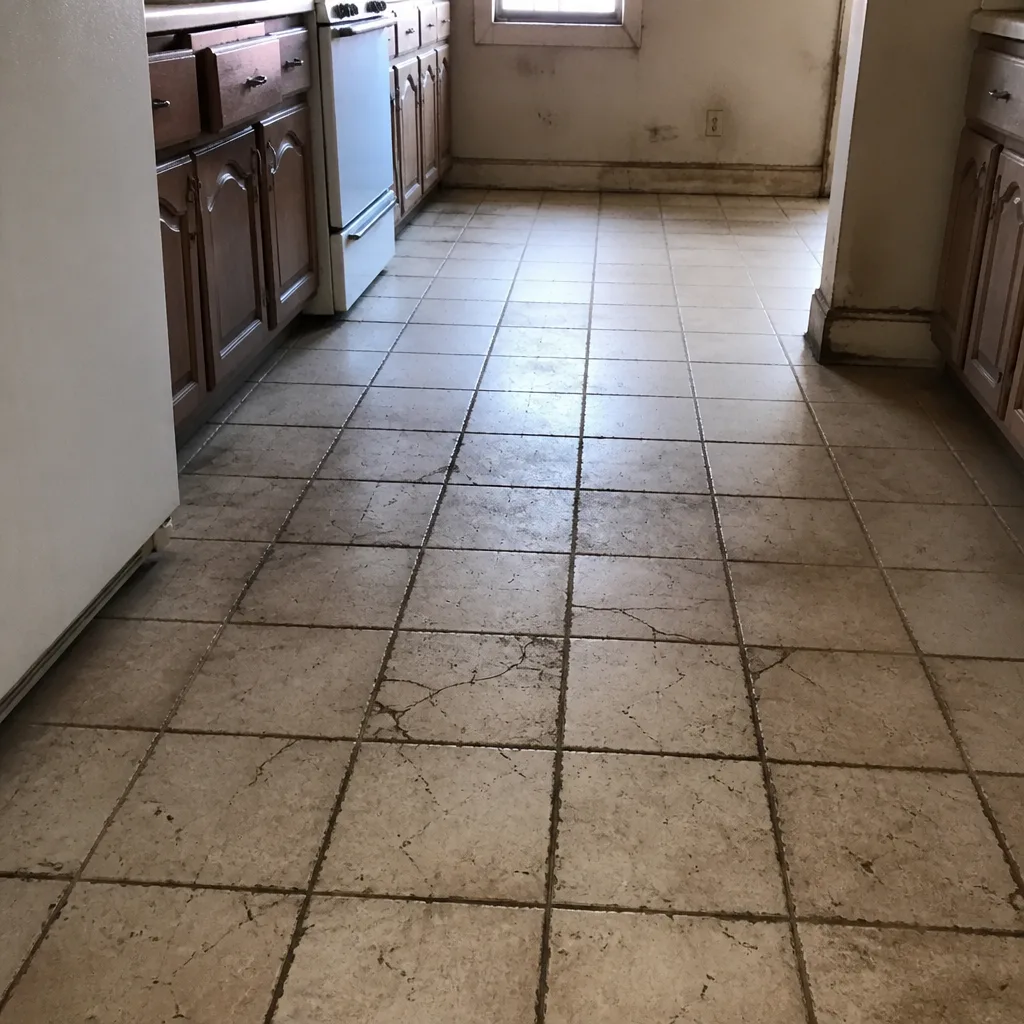 Before
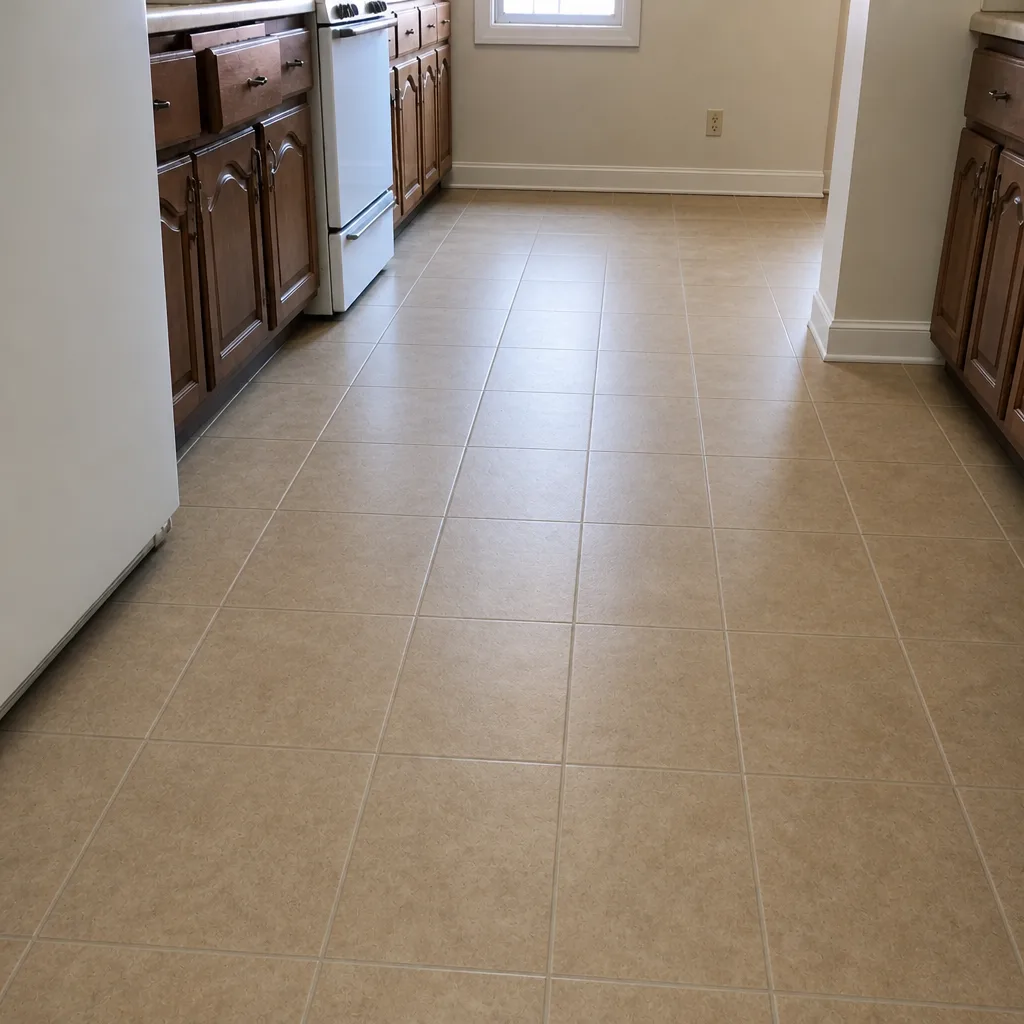 After
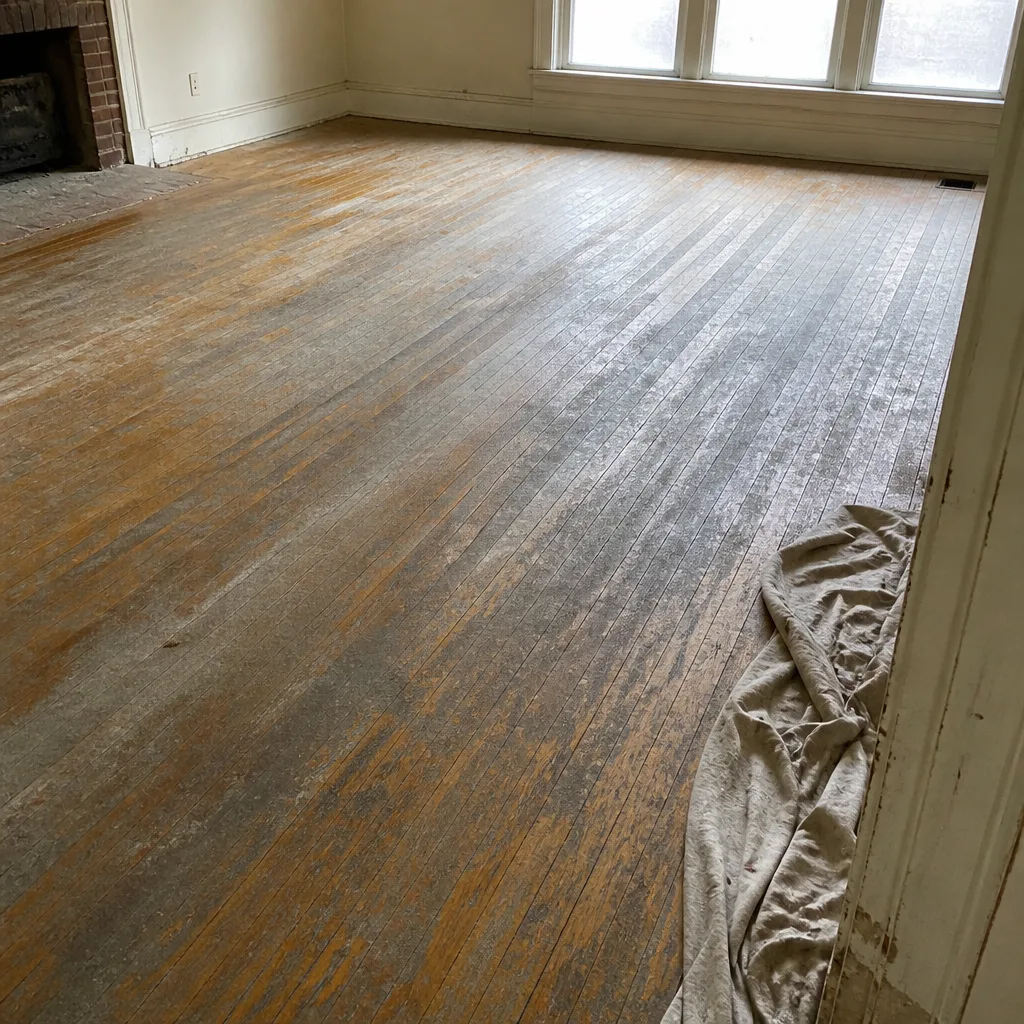 Before
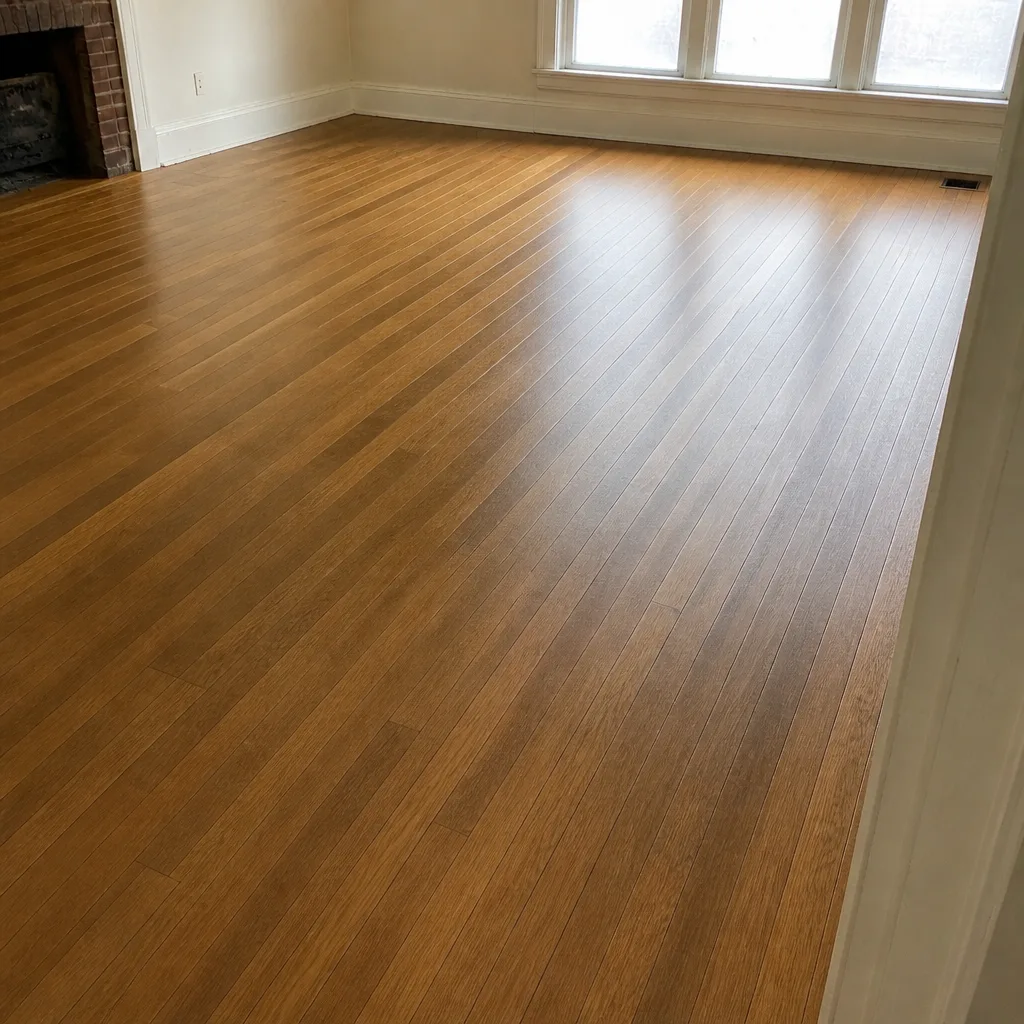 After
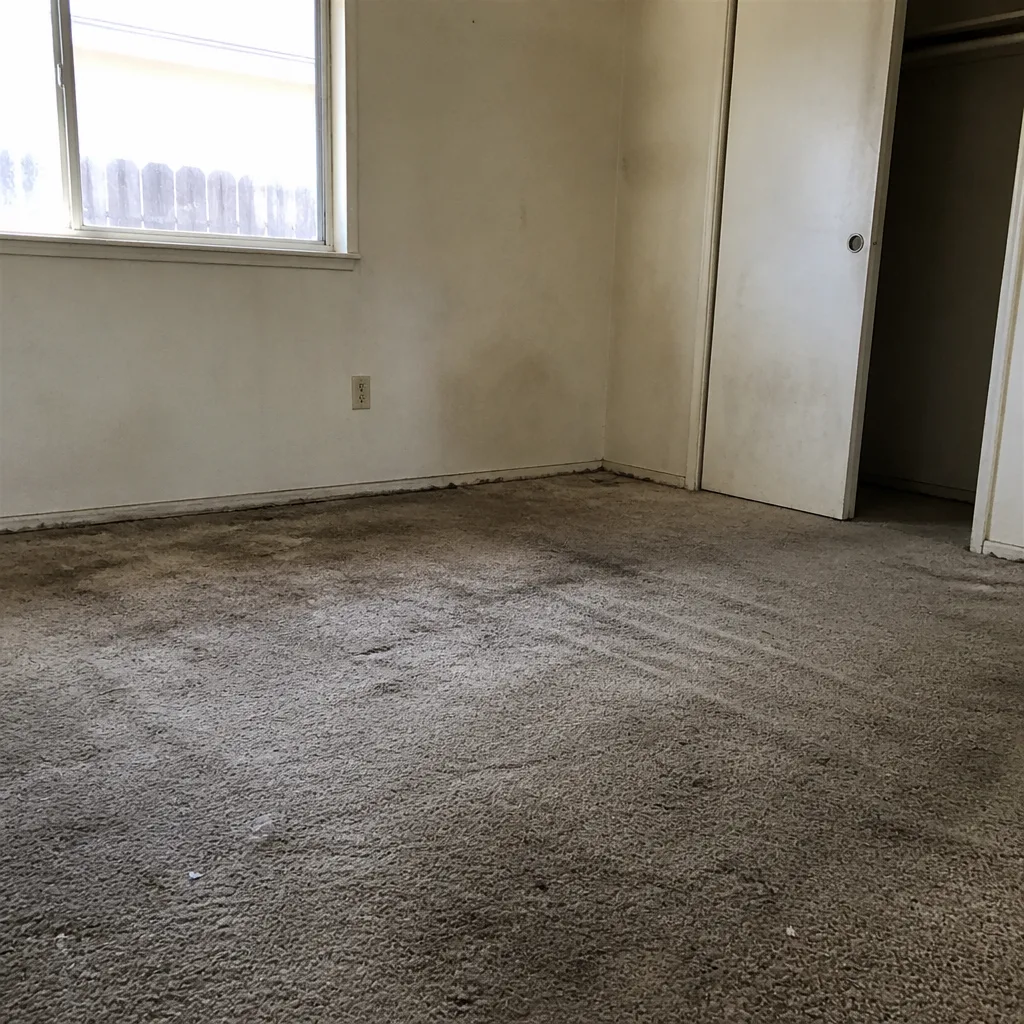 Before
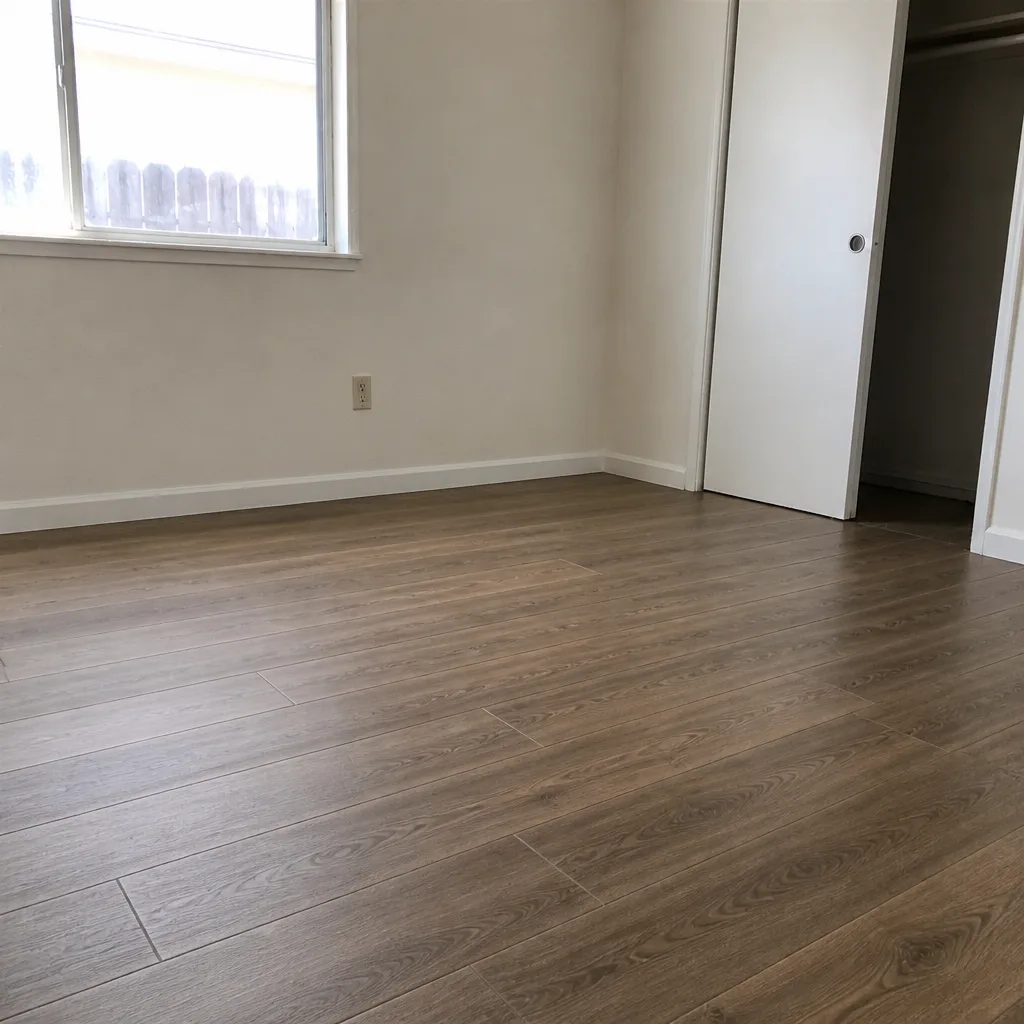 After
When to Call a Professional
Bring in a professional when any of these are true: you feel a soft spot or uneven deflection underfoot, you smell moisture or see dark staining at the seams, you have a cracked tile sitting in a grout field that’s also starting to crack, you’re considering refinishing hardwood and don’t know the board thickness, or you’re deciding between repair and replacement and want a written scope to compare. Time is also a reason to call: a floor that’s failing now will cost more to repair than one that gets assessed while the damage is still localized. Call (844) 560-4386. We answer 24/7. Fast dispatch from 7am to 7pm, Sunday through Friday. We do the substrate check and the product availability check before we quote either option, and the written estimate sets the final price. Flooring Installation Enterprise offers free estimates in Enterprise.
Frequently Asked Questions
The cost depends on the material, the extent of the damage, and what’s under the floor. A single-plank patch or a localized repair is a smaller job than a room-sized fix, and the price is set per job by the written estimate. The estimate visit checks the substrate first, because a repair that ignores a substrate problem isn’t worth quoting. Call (844) 560-4386 for an exact quote. Estimates are free.
Whichever costs less per year of life, not whichever costs less upfront. A repair that buys two more years on a floor that’s already near the end of its life is the more expensive option per year. A repair on a floor that’s still mid-life is usually the lower per-year cost. The right comparison includes the years of service each option delivers.
Check the substrate first. If the floor flexes, if you smell moisture, or if there are visible dark stains at the seams, the substrate may rule out a surface repair. If the subfloor is flat and dry, repair is likely on the table. A professional can confirm in about an hour.
No. Refinishing depends on the thickness of the wood and its condition, and both are checked at the estimate visit. If the boards don’t have enough material above the tongue, a refinished surface will fail on the first pass. A floor that can’t be sanded safely isn’t a refinish candidate.
Ask about availability before committing to the repair. If the line, dye lot, or locking profile is gone, a repair becomes a partial replacement with the closest current product, or a full replacement of the room. Checking the model number with the manufacturer is the first step.
A repair done over a sound substrate usually doesn’t show up at inspection. A repair hiding a moisture problem or a soft spot will, and the buyer’s inspector will use it to renegotiate. Fixing the underlying cause is what makes the repair invisible on the report.
Yes. We handle carpet, tile, and hardwood refinishing, and we check the substrate and product availability before we quote either option. For a floor in Enterprise, the estimate visit is where the call gets made, and the written estimate sets the price. Call (844) 560-4386.
The Bottom Line
The repair-or-replace decision rests on three things, in this order: whether the substrate can carry another product lifecycle, what the true cost-per-year is for each option, and whether the repair will hold up when a buyer’s inspector looks at it. Surface appearance comes last. Repair clearly wins in localized damage under 10% of the space, single-plank LVP, and isolated tile cracks with intact grout. Replacement wins when soft spots, moisture, or deflection are present, and when the product is discontinued. Run the cost-per-year math before you commit, check product availability first, and let the written estimate set the price. Call (844) 560-4386 for a free estimate.
Written by the team at Flooring Installation Enterprise.