
Last updated November 18, 2026
 Hardwood
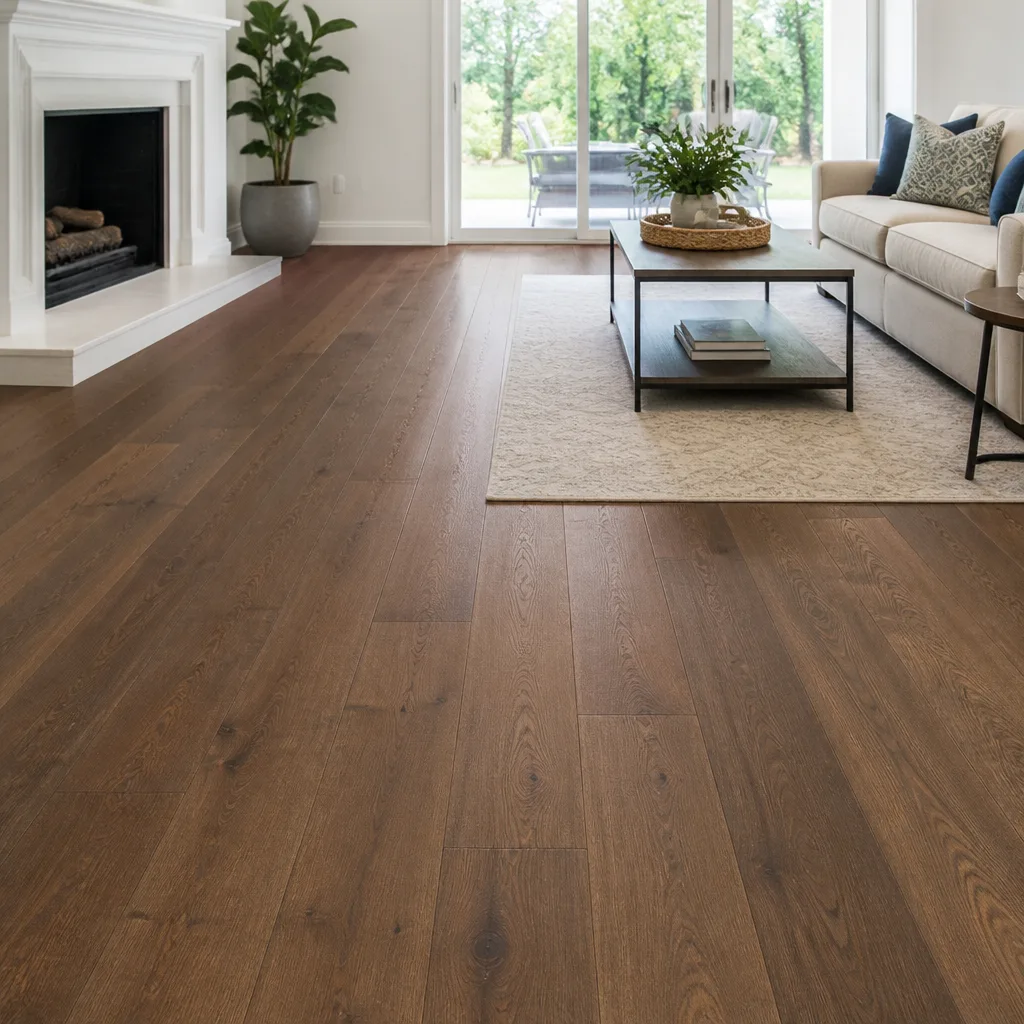 Engineered hardwood
 Luxury vinyl plank
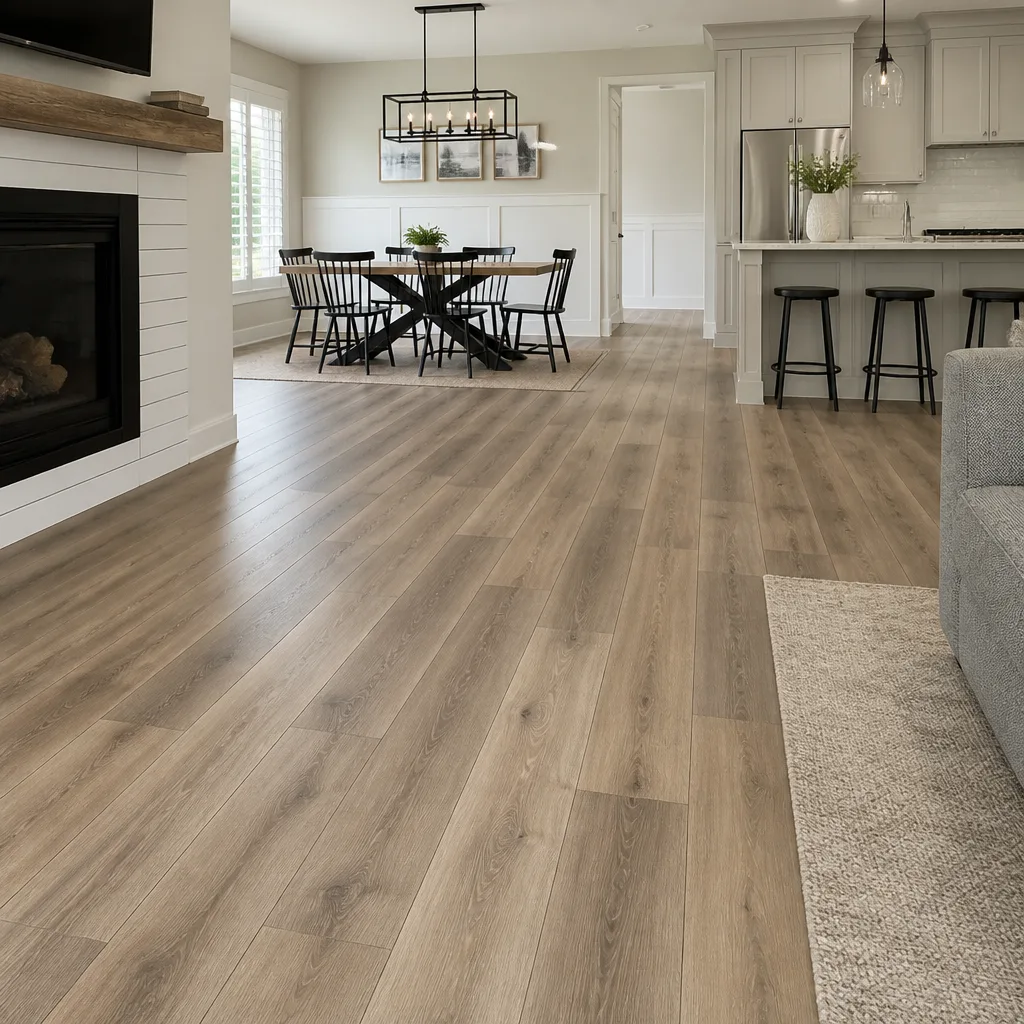 Laminate
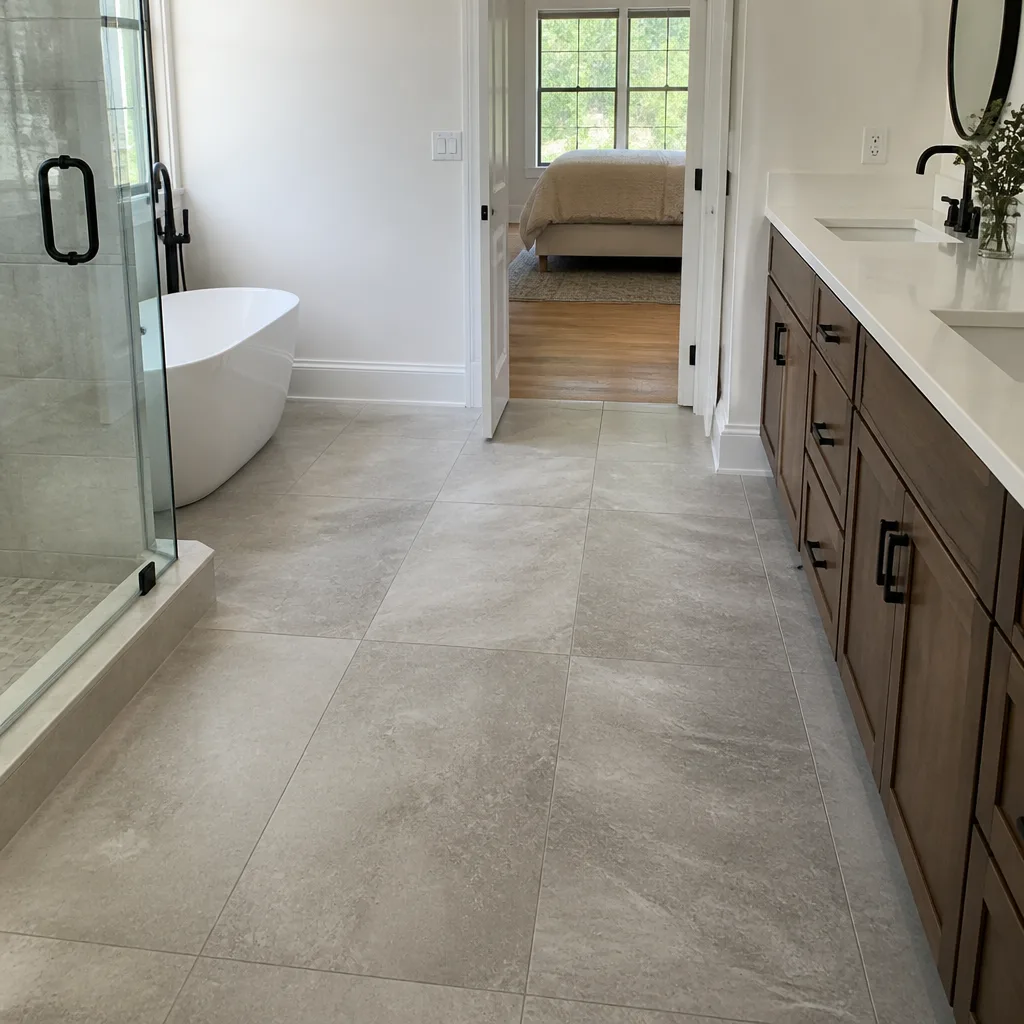 Porcelain tile
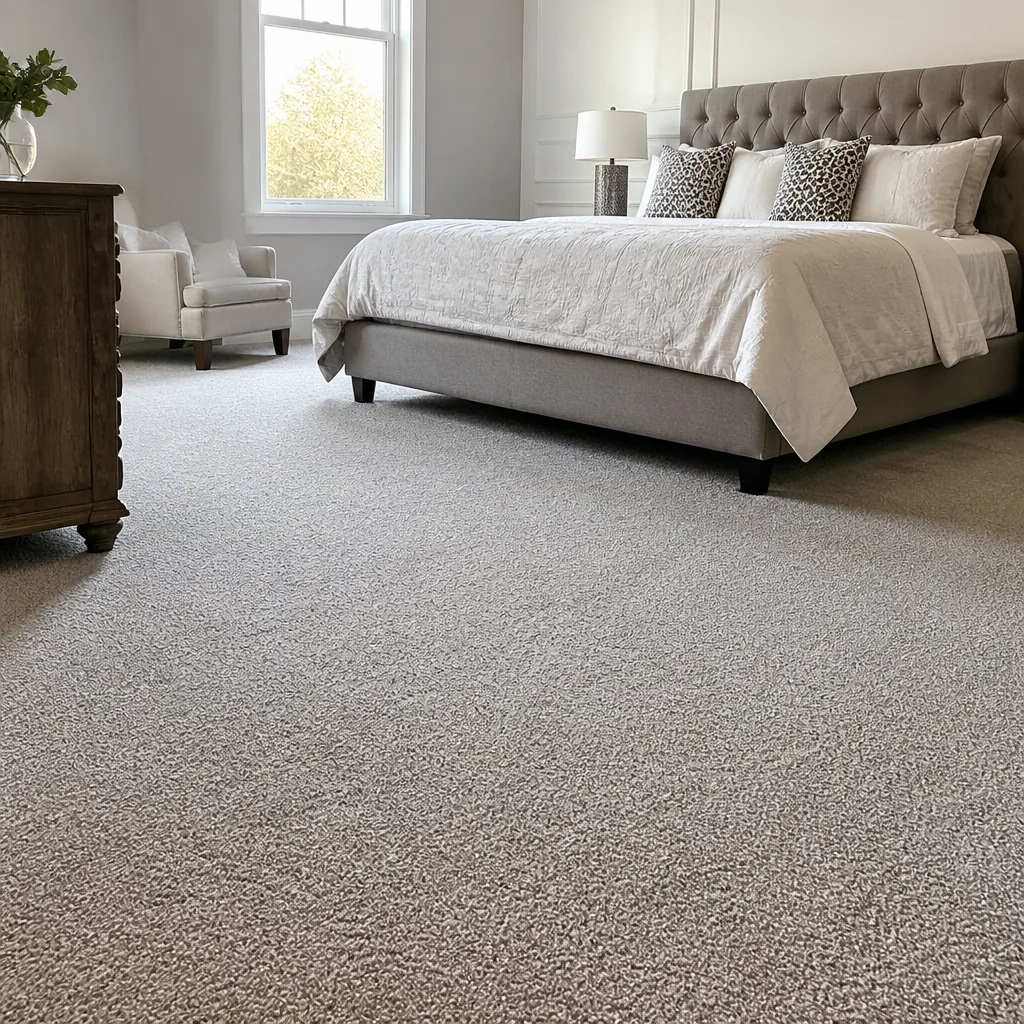 Carpet
 Shaw
 Mohawk
 COREtec
 Pergo
Free in-home measure and written estimate: Shaw, Mohawk, COREtec and Pergo lines compared on your own rooms, with carpet, tile, vinyl plank, laminate and hardwood laid out side by side
Get your free estimateHow to Care for New Flooring: Hardwood, Vinyl, Laminate, Tile and Carpet
The number one cause of premature wear on hardwood and vinyl plank finishes in Southern Nevada isn’t foot traffic. It’s grit. Desert-fine silica works its way in on shoes, paws, and open windows, and then a dry mop or a vacuum brush drags it across the floor like a fine sandpaper block, dulling the finish one pass at a time. Most care guides are written for humid climates and green lawns, which means they get the local part wrong. This one is calibrated for Enterprise, NV: the dry air that pulls at wood, the hard water that clouds grout, and the dust cycle that shapes a real cleaning routine. We’ll go floor by floor – hardwood, luxury vinyl, laminate, tile, and carpet – with the maintenance that actually applies where you live.
Quick Answer
Care for new flooring by matching the routine to the material: vacuum or dry-mop grit off hardwood and vinyl often, keep indoor relative humidity in a steady moderate band so wood doesn’t gap or cup, clean grout-line tile with pH-neutral products rather than acids, and vacuum carpet frequently given how much dust blows through Southern Nevada. Avoid steam mops on plank flooring, harsh chemicals on any sealed surface, and neglected spills that void product warranties. The first weeks matter most – good habits set early are what keep a new floor looking new.
Styles & brands we work with
- Hardwood
- Engineered hardwood
- Luxury vinyl plank
- Laminate
- Porcelain tile
- Carpet
- Shaw
- Mohawk
- COREtec
- Pergo
Table of Contents
- Why Flooring Care in Enterprise Is Different
- Humidity Control: Active Maintenance for Wood Floors
- Hardwood Care That Protects the Finish
- Luxury Vinyl: The Right Mopping Sequence
- Laminate Care and Its Limits
- Tile and Grout with Hard Water in the Las Vegas Valley
- Carpet Care in a High-Dust Environment
- What Voids a Flooring Warranty
Why Flooring Care in Enterprise Is Different
Most flooring care advice assumes a damp, leafy climate. Enterprise is the opposite. The air is dry for most of the year, the wind lifts fine dust off open ground and carries it into homes, and the water coming out of the tap runs hard with minerals. Each of those conditions attacks a different part of a floor, and generic instructions don’t account for any of them.
Here’s what that means in practice. Dry air pulls moisture out of wood, which can open small gaps between planks or contribute to cupping when conditions swing. Fine dust becomes an abrasive once it’s on the surface. Hard water leaves a mineral film that builds up in grout lines and on unglazed tile until it looks like permanent haze. None of these problems show up on day one. They develop over months of small, avoidable habits.
We install all five categories here in Enterprise, and we see the same patterns: wood that gapped because nobody thought about humidity, vinyl that lifted at the seams because it was mopped too wet, grout that clouded because a generic cleaner was doing the wrong job. The care routine below is what we’d give a neighbor.
- Dry air: pulls at hardwood, needs a steady humidity band.
- Fine dust: acts like abrasion, needs frequent gentle removal.
- Hard water: films grout and tile, needs pH-neutral cleaning.
- Strong sun: fades finishes and can discolor vinyl near glass, needs shading.
Humidity Control: Active Maintenance for Wood Floors
In a dry climate, keeping indoor relative humidity stable is not a comfort preference. It’s maintenance. Wood is hygroscopic: it takes on and gives off moisture with the air around it. When indoor air swings too dry, planks can shrink slightly and open gaps at the joints. When it swings too damp, wood can take on moisture and cup at the edges. Either direction is a response to the environment, not a defect in the floor.
The goal is a steady band. Aim to keep indoor relative humidity in a moderately stable range – roughly the middle of the scale, somewhere in the 35 to 55 percent band is a common starting point – and keep it there. That target is a general guide, not a specification: the product instructions and the written estimate for your specific floor set the real numbers, and your installer should tell you what to watch for.
How you hold that band in Enterprise:
- Watch the gauge. A simple hygrometer costs little and tells you what the room is actually doing.
- Use the HVAC system deliberately. Cooling and heating both affect indoor humidity; running the system consistently helps flatten the swings.
- Add moisture when the air gets very dry. A humidifier in the driest months, especially in forced-air homes, helps close the gap between desert air and a stable room.
- Don’t overcorrect. Too much moisture is as hard on wood as too little. Move toward the band, not past it.
If you already see gaps in a wood floor that was recently installed, don’t panic. Dry-season gaps often close on their own when the air steadies. If they don’t, or if edges are rising, that’s worth a look before you assume the floor is failing.
Hardwood Care That Protects the Finish
Hardwood is a finish over wood, and the finish is what your routine should protect. In a dusty environment, the first line of defense is removing grit before it gets ground in. The second is keeping liquid off the surface. The third is not scuffing it with the wrong tools.
Here’s a routine that works for the wood floors we install and the ones we refinish:
- Dry first, always. Before any damp cleaning, remove loose grit with a microfiber dry mop or a vacuum with a hard-floor attachment. Skipping this step is what turns cleaning into polishing with sand.
- Damp, not wet. Use a damp (not dripping) microfiber mop with a cleaner made for finished wood. Wring it out hard. A floor should be touch-dry within a minute.
- Wipe spills fast. Standing water is the enemy of any wood floor. Blot, don’t scrub, and dry the area.
- Use felt pads and mats. Felt pads under furniture legs, and a mat at every entry, cut grit at the source.
- Keep sunlight in check. Strong direct sun through a window can fade a finish over time; blinds or UV film help.
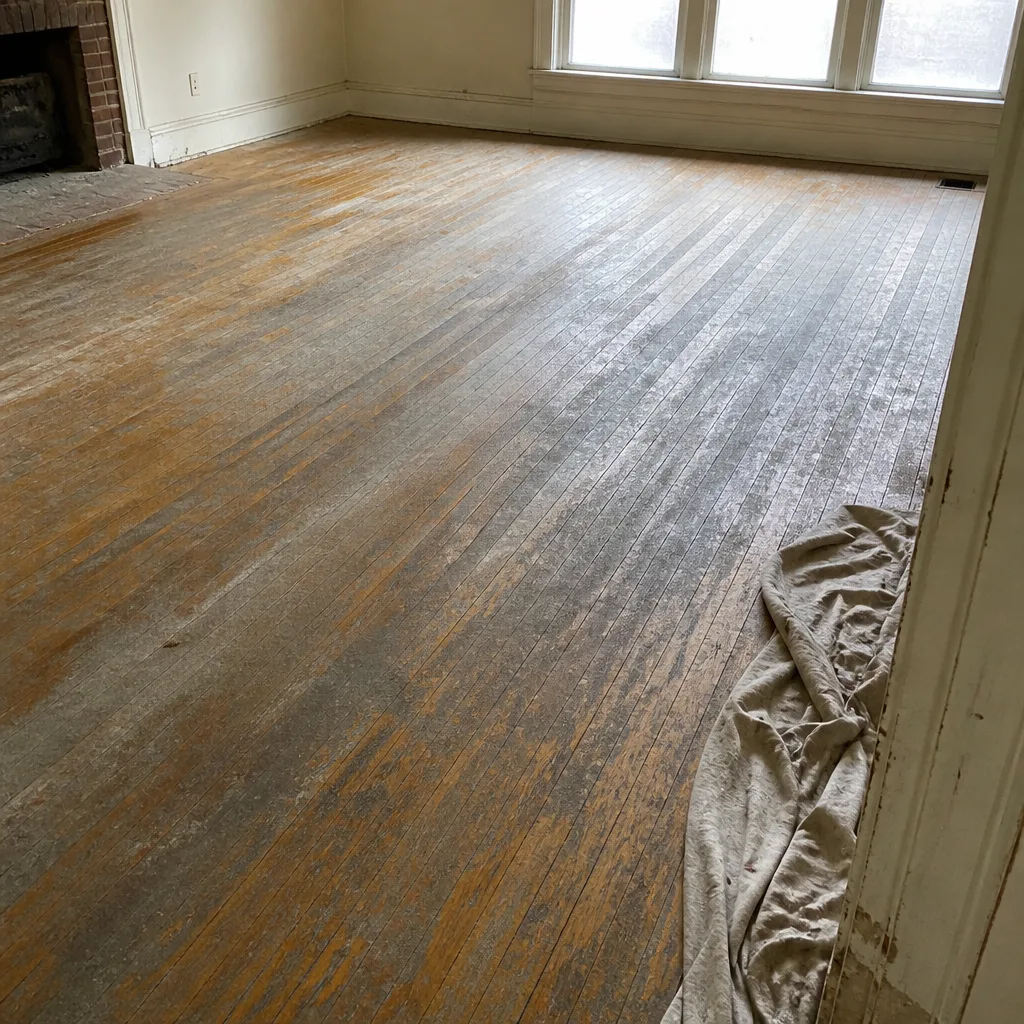
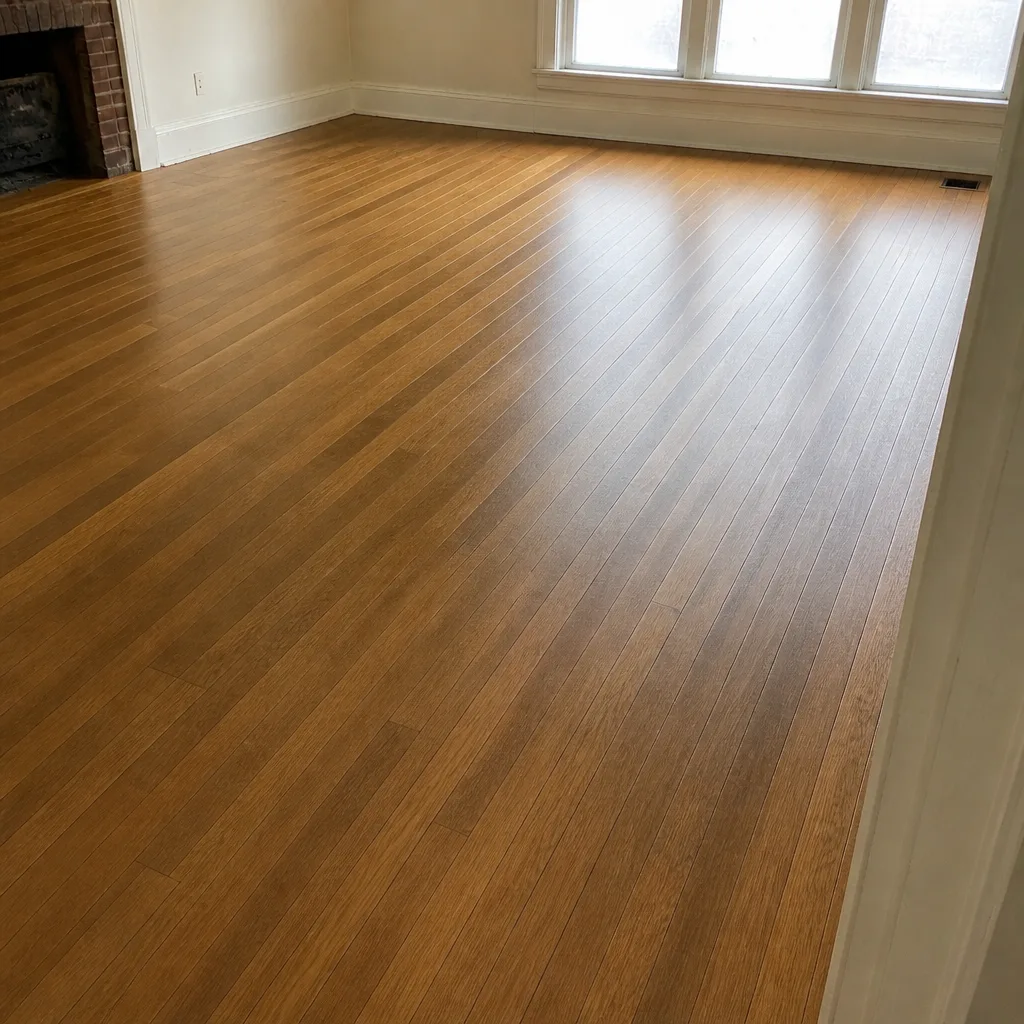
A word on refinishing, since it’s a service we handle directly. Refinishing restores an existing wood floor rather than replacing it, and it preserves original character – which is why it’s often the smarter move for older floors. Whether yours can be refinished, and whether a stain will match what you have, depends on the thickness of the wood and its condition. We check that at the estimate visit; nobody can promise a match from a photo.
Luxury Vinyl: The Right Mopping Sequence
Luxury vinyl plank is water-resistant, which is not the same as waterproof in a care sense. Standing water and moisture from below still have to be dealt with, and the biggest avoidable problem we see is moisture pushing into the seams of an improperly mopped floor. The floor itself is fine; the technique was wrong.
The correct sequence for cleaning luxury vinyl, including brands like COREtec and Karndean, is a specific order:
- Sweep or vacuum dry. Remove all grit with a soft brush or hard-floor vacuum head. Never use a beater bar on vinyl.
- Damp-mop with a pH-neutral cleaner. Mix to the label, use a damp mop, not a soaking one.
- Keep water at the seams to a minimum. Don’t flood the floor; don’t let puddles sit in the joints.
- Dry the surface. A quick pass with a dry microfiber or a dry mop leaves no film.
Two things to avoid on vinyl: steam mops and abrasive scrubbing pads. Steam drives heat and moisture into seams and edges, and abrasive pads dull the wear layer. Both are also the kind of thing that can void a warranty (more on that below).
If your vinyl was installed by a crew that didn’t get the subfloor right, seams can lift even with perfect care. That’s an installation issue, not a cleaning issue, and it’s worth having inspected – which is one reason the install technique on premium plank matters as much as the product. We install and service the floor you choose, and we pay attention to the prep.
Laminate Care and Its Limits
Laminate has a printed wear surface over a core, and it responds to the same basic routine as vinyl but with less tolerance for water. It is water-resistant where it’s made well, not waterproof, and moisture that reaches the core can swell it. Care for laminate is mostly about keeping it dry and keeping grit off.
- Vacuum or dry-mop regularly with a hard-floor attachment. Dust is the everyday issue.
- Damp-clean only. A slightly damp mop with a laminate-appropriate cleaner. Never a soaking mop.
- Wipe spills immediately. Don’t let liquid sit at the seams.
- Skip steam and wax. Steam mops and paste wax both cause problems on laminate.
- Control humidity like you would for wood. Laminate cores can react to big swings in the air, so a stable indoor band helps.
One common mistake is treating laminate like tile and scrubbing it with a wet mop and strong cleaner. That’s exactly what drives moisture into the joints. Another is skipping the felt pads and letting a chair leg grind grit into the surface, which shows up as a dull patch long before the floor is actually worn.
Tile and Grout with Hard Water in the Las Vegas Valley
The Las Vegas Valley water system runs hard, and hard water leaves mineral deposits. On glazed tile those deposits are mostly a surface film. On grout and on unglazed or natural tile, the minerals work into the porous surface and set, and they can look like permanent haze if they’re allowed to build up. This is not about the tile failing; it’s about what’s in the water.
What actually helps:
- Clean tile with a pH-neutral cleaner. It lifts soil without attacking grout or the tile surface.
- Wipe up water before it dries. The deposits come from water left to evaporate; a quick squeegee or towel on shower walls and floors cuts the film.
- Rinse, don’t soak. After cleaning, a clean-water rinse and a dry pass keep mineral residue from setting.
- Seal grout per the product instructions. Sealing is part of grout care; follow the schedule the product gives, not a guess.
What makes it worse: acidic cleaners, which can etch or dull the surface over time; bleach used as a routine cleaner; and scrubbing with abrasive pads, which scuffs grout and can damage glazed tile. If your grout is already cloudy, a professional assessment is the safer route than escalating the chemicals.
Large-format and specialty tile also demand the right install, which is why professional-grade sourcing matters. Daltile is a line we work with, and the point isn’t the name – it’s that large-format tile installs cleanly only when the substrate and the setting are handled properly. For tile projects of any size, tile flooring installation done right from the start saves the care routine a lot of work later.
Carpet Care in a High-Dust Environment
Carpet in a dusty environment collects more than it shows. Fine grit works down into the pile, and if it isn’t vacuumed out, it abrades fibers from the inside. Vacuum frequency is the single biggest care lever you have on a carpet floor in Enterprise.
How to manage it:
- Vacuum more often than a humid-climate guide suggests. High-dust weeks mean more frequent passes with a good vacuum. Slow, overlapping strokes lift more than fast ones.
- Mind the pile direction. Vacuum along the grain of the pile rather than against it. Not every carpet has an obvious nap, but when it does, following it cleans better and disturbs the fibers less.
- Spot-treat spills right away. Blot from the outside in; don’t rub, which drives the stain deeper.
- Rotate heavy furniture and use mats at entries. Traffic lanes wear first; spreading that wear helps.
When is professional extraction worth the cost? Think of it less as a routine cleaning and more as a reset. A carpet that gets frequent vacuuming still picks up deeper soil over time, and periodic hot-water extraction pulls that soil out. The right interval depends on traffic, pets, and the carpet itself; if the pile is starting to look matted in the walkways, it’s probably time. Our carpet installation work includes talking through the care that fits the product you chose, and brands like Shaw and Mohawk build care guidance into their product documentation – follow it.
What Voids a Flooring Warranty
Most warranty problems are self-inflicted, and most homeowners never connect the habit to the claim. The warranty covers product and installation defects under the conditions the manufacturer sets. It does not cover damage from the wrong chemicals, improper cleaning tools, or neglected water. Read your product documentation, and follow it over any generic advice.
The usual warranty-voiding issues:
- Steam mops on plank and laminate. Heat and moisture into seams is a common exclusion.
- Harsh chemicals. Acidic or abrasive cleaners on tile and grout, and the wrong cleaner on sealed wood, can damage the surface in ways a warranty won’t cover.
- Wet-mopping plank floors. Standing water at seams is the classic one.
- Neglected spills. Water left to sit – especially at seams, edges, and under appliances – can become a warranty issue fast.
- Improper humidity. Extreme swings can be treated as an environmental condition rather than a defect.
- Wrong tools. Beater bars on vinyl, abrasive pads on any finish.
None of these are about using the floor. They’re about how it’s cleaned. The product instructions set the specifics; your written estimate and the product documentation are the authority, not a general guide like this one.
Common Mistakes to Avoid
- Dry-mopping grit across a finished floor. Sweeping removes some, but a dry microfiber pass with nothing on it can grind fines into a finish. Vacuum or damp-clean instead.
- Wet-mopping luxury vinyl. The exact problem that leaves water at the seams. Damp only, and dry after.
- Using acidic cleaners on grout and tile. In hard-water Enterprise, it’s tempting to escalate to stronger products – which is exactly what dulls and etches the surface.
- Ignoring indoor humidity. Dry air pulls at wood and big swings are hard on laminate cores. A gauge and a plan prevent both.
- Steam-mopping anything with seams. Vinyl and laminate both suffer from it, and it’s a common warranty exclusion.
- Letting spills sit. A quick blot protects the floor; a forgotten puddle does not.
- Under-vacuuming carpet in a dusty climate. Grit that stays in the pile wears it from the inside long before the surface looks worn.
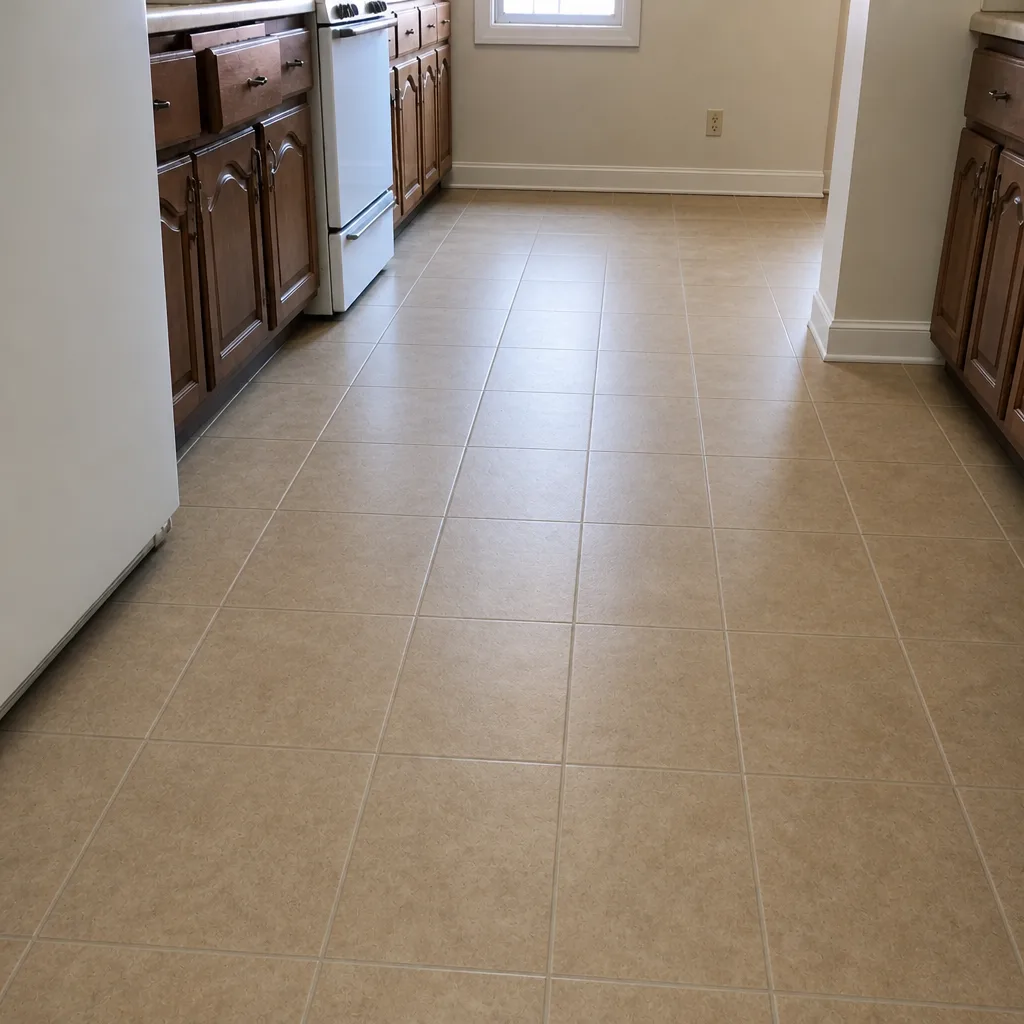
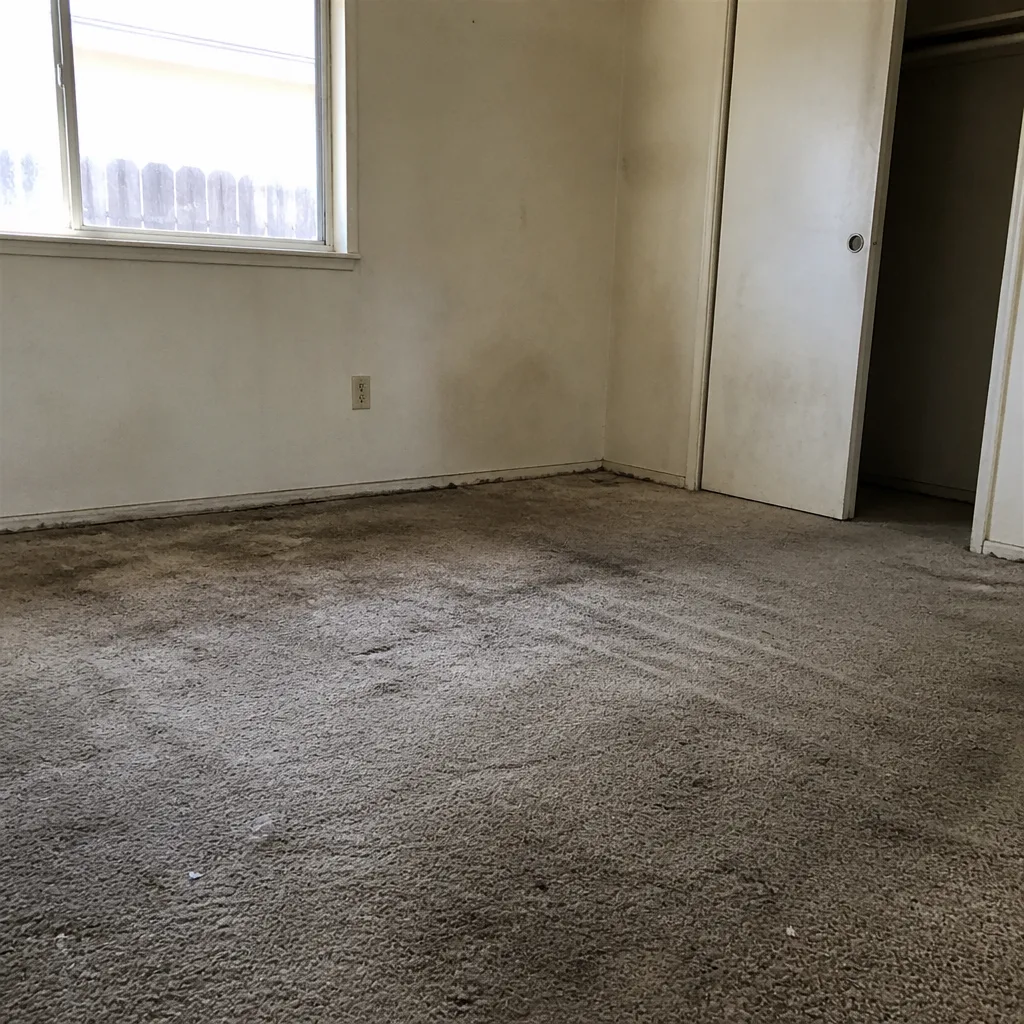
See the difference
 Before
 After
 Before
 After
 Before
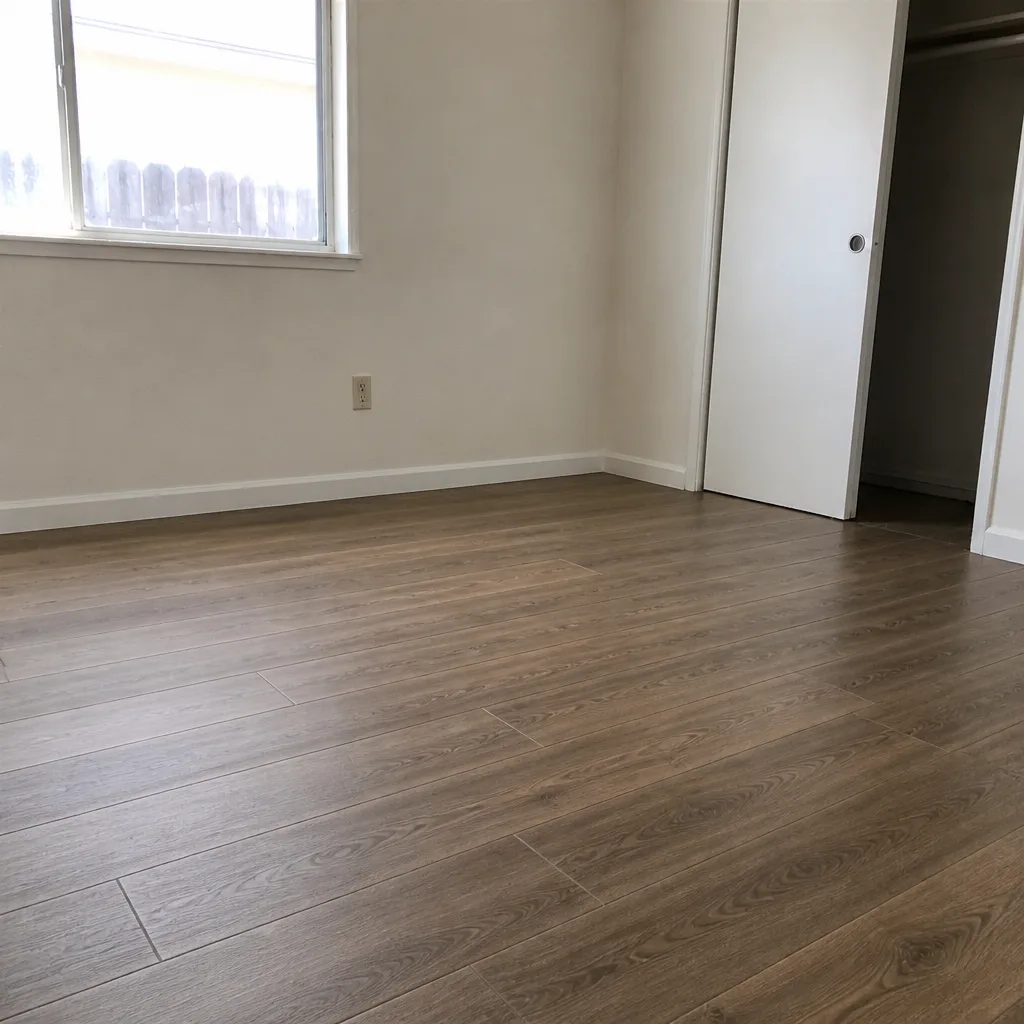 After
When to Call a Professional
Some care is yours, and some is a job for the installer. Call us if wood planks are gapping or cupping and the humidity routine hasn’t steadied it, if vinyl seams are lifting, if grout is clouding despite correct cleaning, or if a floor needs an assessment rather than another cleaning product. Also call if you’re weighing flooring installation against replacement – refinishing an existing wood floor is often the better call than tearing it out, and it’s worth checking before you decide.
We install and service all five categories – from carpet to tile to hardwood – and we handle hardwood refinishing as a dedicated service. Our technicians have up to 9 years of experience, and we work with nine leading brands across the range. Flooring Installation Enterprise offers free estimates in Enterprise. Call (844) 560-4386. We answer 24/7. Fast dispatch from 7am to 7pm, Sunday through Friday, and closed Saturday.
Frequently Asked Questions
More often than a humid-climate care guide recommends, and more often than you’d guess by eye. In a high-dust environment like Enterprise, frequent slow vacuuming lifts the grit before it works into the pile, and it’s the single biggest lever on carpet life. Slow, overlapping strokes clean better than quick passes; follow the vacuum and carpet documentation for specifics.
No. Steam drives heat and moisture into seams and edges, which is exactly what loosens plank joints and can void a warranty. Damp-mop with a pH-neutral cleaner, keep water at the seams to a minimum, and dry the surface after. Call (844) 560-4386 if you’re unsure what’s safe for your specific floor – the estimate is free.
Routine care costs what a mop, a microfiber set, and a pH-neutral cleaner cost – it’s a maintenance routine, not a service. Professional work is priced per job by a written estimate, so the number depends on the floor and the scope. The estimate is free; call (844) 560-4386 for an exact quote.
Dry air pulling moisture out of the wood is the usual cause. Wood shrinks slightly as indoor humidity drops, which opens small gaps at the joints; those often close when conditions steady. Keeping indoor relative humidity in a moderately stable band is the fix. If gaps persist or edges rise, have the floor assessed rather than assume it’s failing.
Steam mops, acidic or abrasive cleaners on tile and grout, and the wrong cleaner on a finished wood surface are common exclusions, along with wet-mopping plank floors and neglecting spills. The product documentation and your written estimate set the real terms. When in doubt, use only cleaners made for your specific flooring product.
Yes, as a periodic reset – frequent vacuuming handles the surface, but deeper soil builds up over time and hot-water extraction lifts it out. The right interval depends on traffic, pets, and the carpet. Call (844) 560-4386 to talk through your floor with a professional – estimates are free.
The Bottom Line
Flooring care in Enterprise comes down to a few habits: remove grit frequently, keep moisture off the wrong floors, hold indoor humidity steady for anything with wood in it, use pH-neutral cleaners on tile and grout, and vacuum carpet more than you think. Avoid steam mops, acidic cleaners, and neglected spills – they’re the common warranty traps. Do the care yourself, but call a pro for assessment, refinishing, or installation questions. We install and service all five categories, from carpet to tile to hardwood, and we refinish wood floors as a dedicated service rather than defaulting to replacement. Call (844) 560-4386. We answer 24/7. Fast dispatch from 7am to 7pm, Sunday through Friday.
Written by the team at Flooring Installation Enterprise.